What Rule by the Few Is
Aristotle’s word for the rule of the few was oligarchia, and the family of “-cracies” below descends from his sorting. Britannica says he used it for rule by the few when exercised not by the best but by bad persons, unjustly. The same number, the few, can be governed by merit, wealth, birth, theft, arms or talent, and each has its own name (Aristotle’s scheme).
Six are covered below: oligarchy, plutocracy, aristocracy, kleptocracy, stratocracy and meritocracy. Britannica notes a recurrent idea that all forms of government are in the final analysis reducible to the rule of a few, whatever the formal authority (the elite theorists).
Oligarchy: Government by a Small Privileged Group
Britannica defines oligarchy as government by the few, especially despotic power exercised by a small and privileged group for corrupt or selfish purposes. Most classic oligarchies resulted when governing elites were recruited exclusively from a ruling caste, a hereditary group set apart by religion, kinship, economic status, prestige or language, and such elites tend to exercise power in the interests of their own class (the definition).
Who owns what is secondary: the few may hold land, offices or capital. Who rules is the point. The best-known modern use of the word is the German sociologist Robert Michels’s “iron law of oligarchy,” his claim that parties and unions inevitably become bureaucratized, centralized and conservative, with a limited group of leaders at the center (the iron law).
Plutocracy: Rule by the Wealthy
Britannica says oligarchies whose members are wealthy or exercise their power through wealth are known as plutocracies. In its kleptocracy article it adds a legal distinction: in a plutocracy, wealth is channeled to the ruling class through public and legal means, whereas a kleptocracy subverts institutions to steal (the distinction).
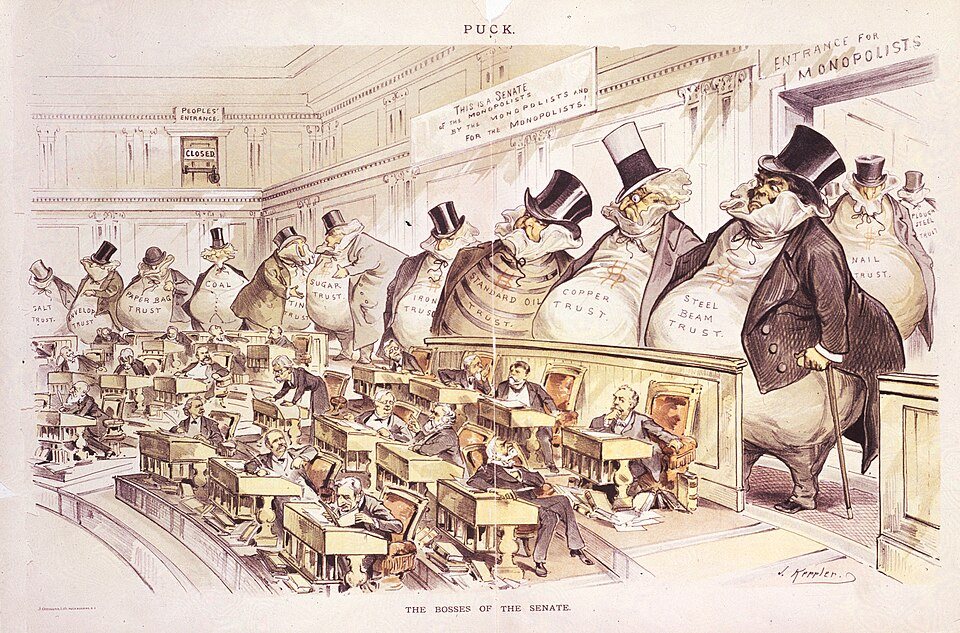
The modern test case is the United States. Martin Gilens and Benjamin Page concluded in 2014 that economic elites and organized groups representing business interests have substantial independent impacts on U.S. government policy, while average citizens and mass-based interest groups have little or no independent influence (the study). A critic, Omar Bashir, argued the result is overstated. A much older picture of the idea is Joseph Keppler’s 1889 cartoon The Bosses of the Senate (the cartoon).
Aristocracy: Rule by the Best, or Said to Be
For Aristotle, Britannica says, aristocracy meant the rule of the few, the morally and intellectually superior, governing in the interest of all. Because “best qualified to rule” is an evaluative notion, it is hard to tell objectively between aristocratic and oligarchic governments, and the word came to mean the ruling upper layer of any stratified group (the definition).
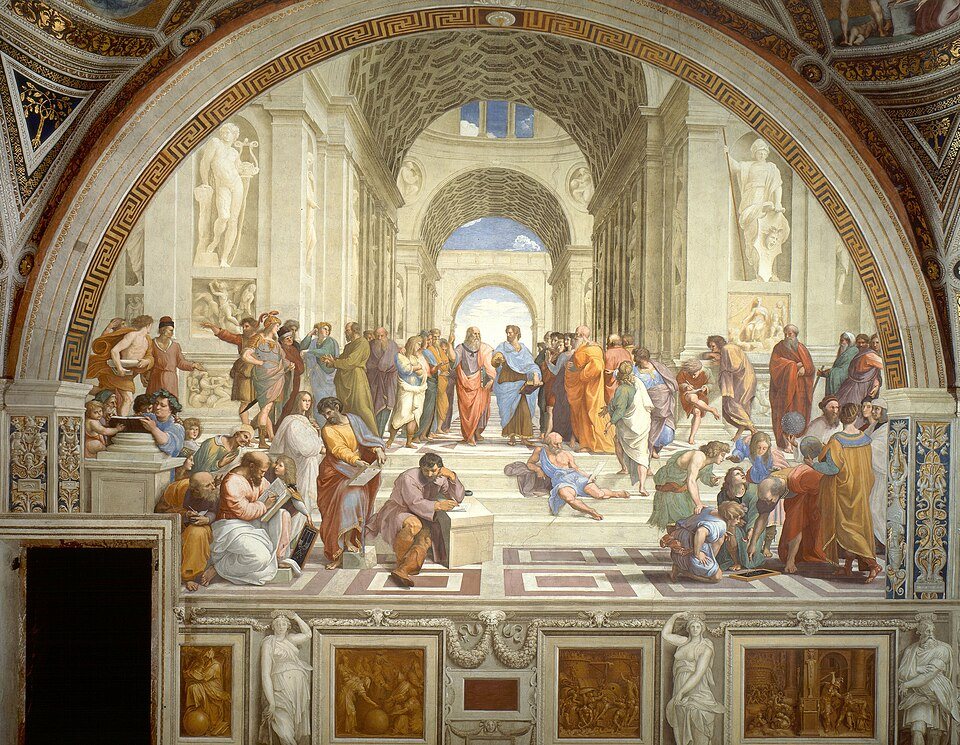
Historical examples include the Brahman caste, Sparta’s Spartiates, Athens’s eupatridae, Rome’s patricians and the medieval European nobility (the social aristocracies). Most were hereditary. Even open aristocracies, Britannica says, tend to become hereditary, and it notes that the share of millionaires and billionaires in the United States born to wealthy parents is notably higher in the early 21st century than in the mid-19th (inherited wealth).
Kleptocracy: Rule by Thieves
Britannica defines kleptocracy as government by individuals who primarily seek personal gain at the expense of those they govern. Unlike an ordinary bribe, it entails the systematic use of the government’s powers to enrich political leaders, and it arises where strong democratic institutions are missing, so it is naturally associated with dictatorship (the definition).

Britannica’s 20th-century cases are Zaire under Mobutu, the Dominican Republic under Trujillo, the Philippines under Marcos and Indonesia under Suharto (the kleptocrats), and, in the 21st century, Putin’s Russia, where one 2015 study found as much as 52 percent of national wealth held abroad (Russia). Kleptocrats hide wealth abroad, and Britannica says cities such as New York, London and Los Angeles are common destinations for laundered money (the laundering system). Transparency International’s 2025 index shows how widespread the corruption is (the index).
Stratocracy: Rule by the Military
Dictionary.com defines stratocracy as government by the military (the word). Britannica’s term for the common form is the military junta, and it notes such rule is normally transient because armies prefer to go back to the barracks, though some juntas have held power for long periods (the junta pattern).
Freedom House’s 2026 reports describe military rule in four countries. In Myanmar, commanders seized the government in February 2021 (Myanmar). In the Sahel, Mali has had a military regime since a 2012 coup, Burkina Faso had two coups in 2022, and Niger’s civilian government fell in a July 2023 coup (the Sahel juntas).
Meritocracy: Rule by the Talented
Britannica defines meritocracy as a system in which people are assigned to positions of power, influence or reward solely on the basis of their abilities and achievements and not their social, cultural or economic background. It is a rejection of hereditary aristocracy and nepotism (the definition). Plato’s Republic, with its classes of philosophers, soldiers and producers, sorted by natural ability, is its ancestor, and Napoleon’s maxim that “career is open to talent” its political slogan.
The word began as a warning. The sociologist Alan Fox used it in the mid-1950s for a pernicious form of social organization, and Michael Young’s satire The Rise of the Meritocracy (1958) mocked a system in which school exams at a young age decided class (Young’s satire). Later writers such as Adrian Wooldridge defended it, and Britannica lists Thatcher, Blair, Cameron, Reagan and Clinton among leaders who pledged to it (its champions). Critics say it masks discrimination and breeds a new performance elite whose earned advantages sustain its dominance (the critics).
Rule by the Few Today
Transparency International’s 2025 index gives the global average as 42 out of 100, its lowest level in more than a decade, with 122 countries scoring under 50. Denmark leads with 89, Finland has 88 and Singapore 84, while South Sudan and Somalia score 9 and Venezuela 10. In the military category, Freedom House scores Myanmar 4 out of 100, Burkina Faso 20, Mali 21 and Niger 27.
In rich democracies the debate is about influence, not seizure. The Gilens and Page finding of 2014 and Britannica’s warning about kleptocratic money in New York, London and Los Angeles are the two most cited arguments that the few shape the policy of the many even where elections are free.