Losing First Place Is Not Losing a Right
The share of American adults who call themselves Christian has fallen: Pew Research Center measured 78 percent in 2007 and 62 percent in its 2023 to 24 survey. Over the same years, a vocabulary of persecution has spread through parts of American Christian and political life. Some of it describes real incidents. Some of it describes something else: the experience of no longer being the default, read as the loss of an equal right. Researchers have a name for one version of that reading, a zero-sum belief, in which another group’s gain is felt as your own group’s loss.
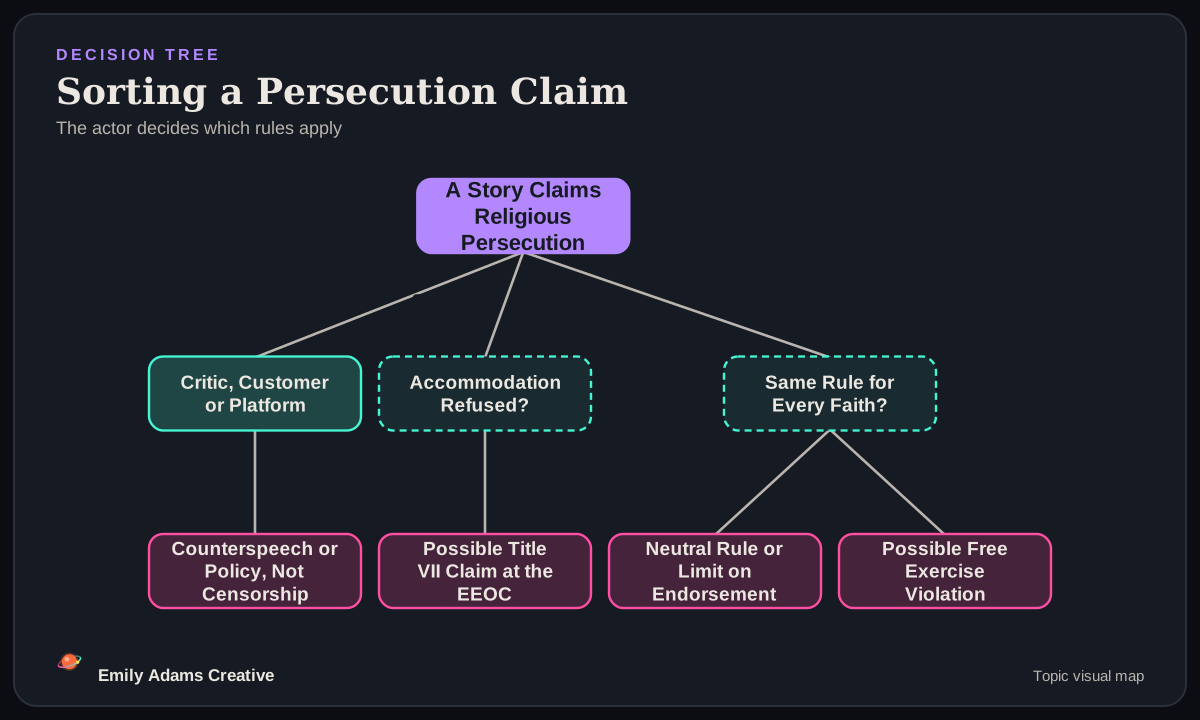
Three different events tend to travel under the single word persecution. Social disagreement, loss of institutional endorsement, and government censorship have different causes and different remedies. A neighbor calling a sermon bigoted is disagreement. A public school that stops leading prayer has withdrawn an endorsement. A state that fined a pastor for the content of the sermon would be censoring. Only the third takes away a right.
Two other terms keep the record honest in both directions. Actual discrimination, meaning unequal legal treatment, threats, violence, unlawful firing, or suppression of worship, happens to Christians and must not be erased. Perceived discrimination is a person’s own appraisal of mistreatment, which can be accurate, partly accurate, exaggerated, or mistaken. Both are real psychological facts; only one is a finding about what happened.
A decline in cultural dominance means a group is less automatically treated as the public norm. It is not, by itself, a decline in freedom. And Christian nationalism, a family of beliefs tying American identity and political authority to a privileged Christian role, is not the same thing as Christianity, church attendance, or conservative theology. The subject is a specific narrative held by some people, not a portrait of believers.
What the Research Shows, and What It Cannot
The mechanism has been tested directly, not only argued about. In two preregistered experiments with 766 Christian Americans, published in 2021, reminders that Christians are heading toward minority status raised the sense that religious freedom was under threat. Nothing about anyone’s rights changed between the conditions; only the reminder did. A 2024 national survey experiment with white Christians found that information about religious demographic change raised fear and disgust, raised perceived discrimination against Christians and against whites, and raised endorsement of Christian nationalism.
A 2022 multi-study paper in the Journal of Personality and Social Psychology asked the exact question: do some Christians see LGBT progress as an attack on Christians? It found zero-sum beliefs rose after certain religious-value prompts, and it linked symbolic threat to perceptions of anti-Christian bias. A 2026 survey experiment found white evangelical participants more responsive to discrimination against Christians than to equivalent scenarios aimed at members of other faiths, an asymmetry that was not identical among other Christian subgroups.
The counterevidence belongs beside those findings, not after them. A national survey published in Socius in 2020 found people in several religious groups, Christians among them, reporting harassment or discrimination. After statistical adjustment, predicted institutional discrimination was about 12.8 percent for Christians, 34.4 percent for Jewish respondents, and 49.8 percent for Muslim respondents. Christians do report bias, and members of minority faiths report far more of it. A 2025 study that oversampled Black and Latino Christians found persecution beliefs more common among Black Christians than white Christians in its data.
None of these studies shows that every persecution claim is false, that all Christians respond alike, or that status threat on its own causes political violence. What they establish is narrower and sturdier: in the populations tested, reminders of lost majority status can raise felt threat to religious freedom without any new restriction on actual rights.
The numbers behind the anxiety need the same care. Pew’s Religious Landscape Study found 62 percent of U.S. adults identifying as Christian in 2023 to 24, down from 78 percent in 2007 and 71 percent in 2014, with signs that the decline has recently leveled off. PRRI’s 2025 Census of American Religion put the figure at 66 percent: 41 percent white Christian and 25 percent Christians of color. The two surveys use different methods and cannot be joined into one trend line. On either count, Christians remain a majority of American adults, and a falling share measures neither legal persecution nor lost freedom.
Claim One: Traditional Gender Roles
“Christians aren’t even allowed to express traditional gender roles anymore.”
Christians teach, write about, and live traditional gender roles openly, and couples choose them freely. What the law limits is imposing those roles on other people, such as an employer refusing to hire qualified women. More choices for women did not remove anyone’s choice to live traditionally. Both options exist side by side.
The claim folds three different things together. A belief or argument, such as the view that spouses should choose a provider and homemaker arrangement, is expression. A voluntary practice, a couple freely adopting those roles, is private life. An imposition on others, such as a public employer passing over qualified women because of a gender-role belief, or a government making those roles mandatory, is a different act governed by different law.
The test is whether a person is being punished for holding or voicing a view, or is asking for permission to enforce it on someone else. The first can raise free-speech and free-exercise questions, and disputes with governments or employers need fact-by-fact review. The second runs into nondiscrimination law and other people’s autonomy. The zero-sum error, where it appears, is reading more options for women as the end of the traditional option. Both options can exist on the same street, in the same church.
Claim Two: Saying Homosexuality Is a Sin
“Christians can’t even say homosexuality is a sin anymore.”
Churches preach traditional sexual ethics every week, legally. Other people criticizing that teaching is disagreement, not censorship. Where real conflicts arise, courts hear them: in 303 Creative (2023), the Supreme Court ruled that Colorado could not force a designer to create wedding websites she objected to. The protection exists, and believers are using it.
Christian individuals and churches remain free to preach, publish, debate, and advocate traditional sexual ethics. Other people are equally free to criticize those teachings, and counterspeech is not censorship. When the claim points to a real dispute, it usually sits in one of several distinct settings: sermons and political advocacy, a private platform’s content rules, a workplace’s anti-harassment and accommodation rules, public-accommodation law, or a government sanction aimed at a religious viewpoint. Each has its own rules.
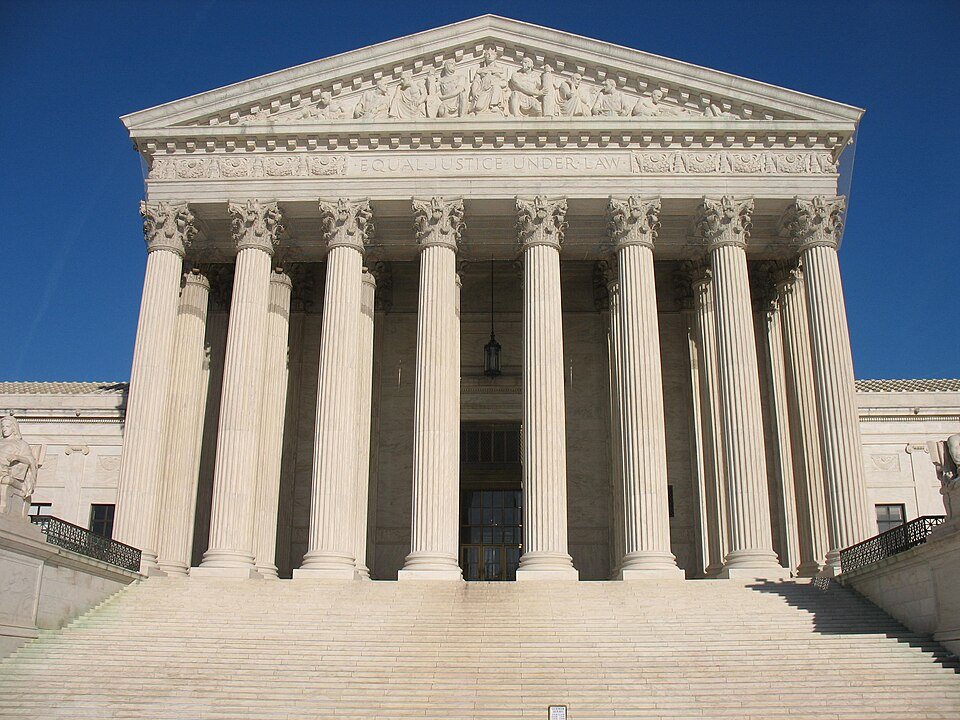
The Supreme Court has drawn some of those lines, often in favor of religious claimants. In 303 Creative LLC v. Elenis, decided June 30, 2023, it held that Colorado could not compel a web designer to create expressive wedding websites carrying messages she objected to. The ruling protects against compelled creation of specific expression; it is not a general right to refuse any service to a protected class. In Groff v. DeJoy, also in 2023, the Court clarified the hardship an employer must show before refusing a religious accommodation. Both cases show the courts open to religious claims, which is the opposite of a closed door.
Claim Three: The Bible and Prayer in Public Schools
“They kicked God, the Bible, and prayer out of public schools.”
Students were never barred from the Bible or prayer. The Education Department’s February 2026 guidance says students may bring and read Bibles in personal time, pray alone or with friends, and form religious clubs. What is restricted is school-led worship, because a public school cannot choose an official religion for children of every faith and none.
The U.S. Department of Education’s guidance of February 5, 2026 separates the two things the claim joins: private religious expression, which is protected, and government establishment or endorsement of religion, which is restricted. Under the guidance, a student may bring and read a Bible during permissible personal time on terms comparable to other reading outside the curriculum. Students may pray privately or with peers, without school coercion, at appropriate times. A qualifying student religious club may be covered by federal equal-access protection. Academic study of the Bible as history or literature is generally permitted when the purpose is educational rather than devotional. A teacher’s personal religious observance is protected in appropriate contexts, with official duties and student coercion as the limits.

What stays restricted is the school itself acting as a church: officials directing mandatory Christian worship, or a public school presenting Christianity as the state’s religion. “Let students bring Bibles,” “teach about the Bible,” and “require school-sponsored worship” are three different proposals, and only the third is barred. A consistency test settles much of the rest: the same private-expression rules protect Muslim, Jewish, Hindu, and nonreligious students. Equal treatment does not require the government to promote any religion as official truth. Details still turn on coercion, age, setting, and whether an adult is acting in an official capacity, and they can vary by court and district.
Claim Four: LGBTQ Content in Schools
“Schools are forcing kids to renounce their faith with LGBTQ lessons.”
Mentioning that LGBTQ families exist does not force a child to change beliefs. Where a real conflict arose, the courts acted: in Mahmoud v. Taylor (2025), the Supreme Court sided with Maryland parents of several faiths who wanted notice and opt-outs. That is the system protecting religious families, not persecuting them.
Acknowledging that LGBTQ people and different family structures exist does not, by itself, require a child to affirm any theological belief. Learning that something exists is different from being made to endorse it, and that distinction covers a great deal of ordinary classroom life, in which children meet people whose faiths and families differ from their own.
There is also a significant counterexample, and it deserves full weight. In Mahmoud v. Taylor, decided June 27, 2025, the Supreme Court considered a Maryland school district’s LGBTQ-inclusive elementary storybooks and its refusal to give parents notice or the chance to opt their children out. The Court held that the parents, who came from several faiths, were entitled to preliminary relief on free-exercise grounds on the facts presented. That was a real constitutional dispute, decided in the parents’ favor. It does not make every inclusive lesson persecution, and it does not make every parental objection mere discomfort with pluralism.
Claim Five: Canceled for Believing
“Christians are getting canceled for their beliefs.”
Which action, and by whom? People criticizing a belief is free speech, not cancellation. A government punishing a religious viewpoint would be unconstitutional, and an employer refusing a reasonable religious accommodation can violate federal law, as the EEOC explains. Those protections are real, and naming the actor shows which one applies.
“Canceled” names a feeling, not a legal category, so the first step is to specify the action. Citizens publicly criticizing a religious position are engaged in counterspeech. A government punishing someone for a protected religious viewpoint commits a potential free-speech or free-exercise violation. A private employer disciplining conduct under a neutral anti-harassment policy calls for fact-specific employment analysis. An employer refusing a reasonable accommodation without an adequate legal basis may violate Title VII. A private platform moderating content is applying its own policy, which is not automatically a First Amendment matter. A business that says it is being compelled to create expression raises the question 303 Creative answered.
The consequence a person feels does not decide which category an event belongs to. Sometimes rights genuinely conflict, and courts must weigh them under the governing constitutional and statutory tests. Sorting is not a way to dismiss the complaint. It sends the complaint to the right remedy, which may be a lawsuit, a charge with the Equal Employment Opportunity Commission, a public reply, or nothing at all.
The Recurring Move, and the Incel Comparison
Across the five claims, the same sequence recurs in some versions of the narrative. A social change arrives: more autonomy for women, more LGBTQ visibility, more religious pluralism. Some people perceive a decline in their group’s symbolic standing, which registers as a threat to moral identity, to a hierarchy, or to expected influence. Then comes the zero-sum inference: their gain must mean my equal rights are being taken. A collective persecution narrative follows, and networks and political mobilization can reinforce it. Experiments support some of these steps for specific populations. The sequence is a comparative model, not a universal path, and it does not describe every Christian.
A similar move appears in a very different setting. Parts of the online incel and manosphere world tell a story in which women’s independence means men are being deprived of relationships, value, and authority. Set that beside the selected persecution narrative, in which more recognition for other faiths and for LGBTQ people means Christianity is being silenced, and the proposed mechanism is the same: loss of default authority experienced as a denial of equal rights. The comparison is between narratives and mechanisms, not between people.
The shared dimensions are specific: expectations of special status, identity threat framed as existential loss, blame placed on outsiders for complex change, selective examples treated as proof of group-wide victimhood, leaders offering restoration, and outside criticism read as confirmation. Research on men supports a status-threat mechanism there too, and studies of identity fusion among self-identified incels link deep merging with the group to approval of harm, without showing that fusion causes violent acts.
The differences are larger than the similarities. Christianity is a set of enduring religions with diverse theologies and major institutions; incel communities are recent, decentralized online subcultures. Christian persecution has real historical and present-day examples around the world, and some American claims describe real incidents. Dating rejection is not a free-exercise or compelled-speech question. Direct studies of incels find substantial loneliness and mental-health distress, and no such diagnostic assumption applies to Christians. Both narratives can be monetized or mobilized, which is something to document case by case rather than assume.
Seven Questions Before Calling It Persecution
Any specific story can be tested with a seven-part audit. Start with the exact claim: what speech, worship, action, or policy is said to be forbidden? Name the actor: a government, a school official, an employer, a platform, a customer, a protester, a religious organization, or a court. Identify the consequence: a criminal sanction, a discriminatory denial, a lost accommodation, public criticism, a firing, moderation, or plain disagreement.
Then name the right at stake, whether free speech, free exercise, establishment, equality, Title VII, parental rights, or compelled expression, and notice where two of them pull against each other. Run the comparative fairness test: would the same rule apply to a Muslim, Jewish, atheist, or LGBTQ claimant in materially similar circumstances? Weigh the quality of the evidence: a dated court order or agency decision is not a news summary, an anecdote, a political advertisement, or a hypothetical. Finally, look at the remedy sought: equal freedom and accommodation for everyone, or preferential authority for one worldview.
One rule governs the whole audit. Do not define persecution so narrowly that real discrimination vanishes, and do not define it so broadly that every loss of prestige or every disagreement qualifies.
The strength of the evidence differs from proposition to proposition. Direct experiments support the findings that declining demographic status can raise felt threat to religious liberty, that religious change can raise Christian nationalist support in white Christian samples, and that some Christians read LGBTQ progress through a zero-sum lens. Survey evidence contradicts the claims that American Christians never face discrimination and that persecution beliefs are only about white racial loss. Federal guidance contradicts the claim that students cannot read the Bible or pray, and Mahmoud contradicts the claim that curriculum disputes never raise real free-exercise questions. The incel comparison is a strong inference, but no single head-to-head study tests the complete model.
Not Only a White Grievance
Much commentary treats Christian persecution beliefs as a stand-in for white racial anxiety. The data complicate that. The 2025 Fiery Furnace research note, built with oversamples of Black Christians and Latino Christians, found persecution beliefs more prevalent among Black Christians than white Christians in its dataset, with related predictors across racial groups. Its authors dispute an explanation built only on fears of racial replacement.

That does not erase the racial dimension where it appears. The 2024 Fear and Loathing experiment found that messages about religious change moved white Christians’ support for Christian nationalism, while messages about racial change did not have the same uniformly strong effects. Read together, the studies suggest religious identity and theology are independent dimensions of the belief, alongside whatever racial status some versions carry.
The 2026 discrimination study adds that white evangelical respondents judged discrimination differently depending on who was targeted, an asymmetry not identical in other Christian subgroups. PRRI’s 2025 count shows why one bloc called “Christians” misleads: one in four American adults is a Christian of color, and white evangelical, mainline Protestant, Catholic, Black, and Latino believers should not be assumed to answer these questions the same way.
Running the Audit on a Viral Story
Take a familiar shape of viral post: “A Christian girl was told she can’t read her Bible at school.” The audit turns that sentence into questions. The exact claim matters first: was she reading at lunch or in free time, or during a lesson when every student was told to put away outside books? Under the 2026 federal guidance, a student reading a Bible during permissible personal time is generally protected on terms comparable to other outside reading.

Next, who acted, and what happened: one teacher’s remark, a written district rule, or a disciplinary record? Would a Muslim student reading the Quran, or any student reading a novel, have been treated the same way? Is the source a district statement, a complaint, a court filing, or a screenshot with no names or dates? Each answer moves the story toward one of two outcomes, and both are useful to know.
If the facts hold and the rule singled out religious reading, the story describes a real violation with real remedies, and the people who share it are right to object. If the student was asked to put every outside book away during instruction, the story describes an ordinary classroom rule. The audit is built to find the cases that check out as reliably as it finds the ones that do not.
Persecution Abroad as a Yardstick
The word persecution has a fuller meaning that is worth keeping intact. Christian persecution has important historical and present-day examples around the world, where the full form of the word applies: the actor is the state or an armed group, the consequence is prison, violence, or the closing of worship, and the target is chosen for faith. Measured against that yardstick, the five American claims sort into clearer categories.
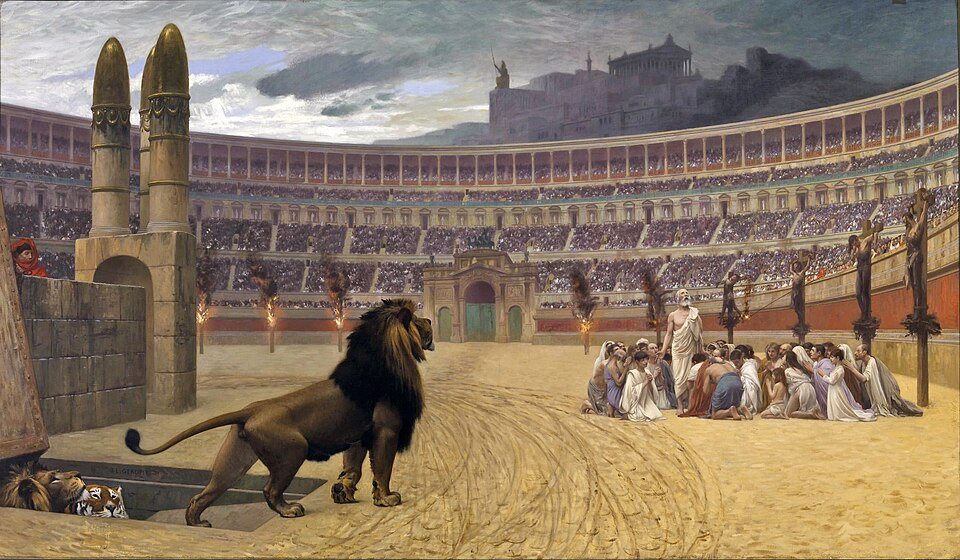
Using the yardstick does not mean American claims must reach that level before they count. Unlawful firing, unequal treatment by a government office, and harassment are real harms at any scale, and the Socius survey shows Christians among the groups reporting them. The yardstick does a different job: it stops the word from stretching until it covers lost prestige, criticism, and real repression all at once, which drains it of meaning for the people who face the last. A shared threshold lets believers and skeptics argue about the same thing.