The Yardstick: The Party in Its Own Words
A fair test of whether a movement belongs to a party uses the party’s own words, not its opponents’. The Republican Party wrote them down every four years. From 1980 through 2016, its national platforms repeated a stable set of commitments: free trade, strong alliances against Moscow, limited federal power, the states as the government closest to the people, free markets without bailouts, an independent Federal Reserve, a balanced budget amendment, and the rule of law.
Behind the platforms stood the thinkers and leaders the party itself claimed. Dwight Eisenhower warned against living for today at the expense of our grandchildren. Barry Goldwater built the modern conservative movement on limited constitutional government. William F. Buckley Jr. founded National Review in 1955 to give that movement a voice. Russell Kirk distilled conservatism into ten principles, among them prudence and “prudent restraints upon power.” And Ronald Reagan became the figure every later Republican measured himself against.
The test that follows takes each principle in turn, quotes what the party said, and sets the MAGA-era position or action beside it with a date. MAGA here means the movement and governing program built around Donald Trump since 2016, including his second administration that began in January 2025. Where a principle held, the record says so too.
Free Trade and Faithful Allies
“Tariffs are the conservative position. Reagan used tariffs too.”
Reagan imposed a few targeted duties and said he was loath to. He also said high tariffs inevitably lead to retaliation and trade wars, and every Republican platform from 1980 to 2016 endorsed free trade. A baseline tariff on all imports first appeared in the 2024 platform, and the Supreme Court ruled in 2026 that the emergency tariffs were unlawful.
No principle was stated more plainly. The 1980 platform said “The Republican Party believes in free trade.” Reagan devoted radio address after radio address to the point. In an April 1987 address he said a tariff only looks like “the patriotic thing” at first, and that the Smoot-Hawley tariff of 1930 had deepened the Depression. In November 1988 he warned against “demagogs who are ready to declare a trade war against our friends.”
Reagan was not a purist. He imposed duties on Japanese semiconductors in 1987 and called them steps he was “loath to take.” The difference is scale and direction. The 2024 Republican platform promised “baseline Tariffs on Foreign-made goods.” In early 2025 President Trump declared national emergencies over drugs and trade deficits and imposed a tariff of at least 10 percent on imports from every trading partner. On February 20, 2026, the Supreme Court ruled in Learning Resources v. Trump that the emergency law he used does not authorize tariffs at all.
The same addresses tied trade to alliances. “Our peaceful trading partners are not our enemies; they are our allies,” Reagan said in 1988. His party’s foreign policy rested on containing the Soviet Union and on NATO. As late as 2016, the Republican platform pledged not to accept “any territorial change in Eastern Europe imposed by force, in Ukraine, Georgia, or elsewhere.”
Then the position moved. At a rally in February 2024, Trump said he had told a NATO ally he would encourage Russia “to do whatever the hell they want” to members behind on defense spending. Two months later, 112 House Republicans voted against military aid to Ukraine while 101 voted for it. In March 2025, days after a heated Oval Office meeting with Ukraine’s president, the administration paused military aid to Ukraine.
The Shining City and Its Doors
On immigration the party’s record is more mixed than either side usually admits, and enforcement was always part of it. The 1980 platform praised American hospitality to strangers and also said immigration “must not be determined solely by foreign governments.” Reagan signed the Immigration Reform and Control Act in 1986, which punished employers who hired unauthorized workers and gave legal status to long-settled immigrants, people he said “now must hide in the shadows.”

Reagan’s own vision was generous. In his farewell address he described the shining city on a hill: “if there had to be city walls, the walls had doors and the doors were open to anyone with the will and the heart to get here.” George W. Bush carried that line forward. In a 2006 address he rejected both amnesty and mass deportation and argued for “a rational middle ground.” In 2013 the Senate passed a bipartisan reform bill with 14 Republican votes; the House never took it up.
The 2024 platform’s first two promises were to “seal the border” and carry out “the largest deportation operation in American history.” The detention build-out, the end of humanitarian parole and the cuts to refugee admissions that followed are tracked on the site’s Project 2025 page. Measured against Reagan’s open doors and Bush’s middle ground, that is a reversal. Measured against the party’s long-standing demand for enforcement, it is an escalation of something old.
Limited Government and the Power of One Office
“Republicans have always been for a strong president.”
Republicans backed a strong executive in foreign affairs, but the party’s 2016 platform condemned governing by executive order in areas reserved to Congress. In 2026 the Supreme Court, with six Republican appointees, ruled that the emergency tariffs exceeded the president’s power and refused to let him fire a Federal Reserve governor.
The party’s constitutional principle was that power should be divided and checked. When Barack Obama governed by executive action, the 2016 platform accused him of using executive orders “to enact national policies in areas constitutionally reserved solely to Congress” and of changing “a government of laws and not of men” into “just the opposite.” Russell Kirk’s ninth principle asked for “prudent restraints upon power.”
The MAGA-era presidency claimed more. Tariffs, which the Constitution assigns to Congress, were set by emergency declaration until the Supreme Court said no. The White House used pocket rescissions to cancel billions in spending Congress had approved. It fired members of independent commissions at will, and in June 2026 the Supreme Court agreed in Trump v. Slaughter that the president may remove Federal Trade Commission members without cause.
Honesty requires a qualification. A strong presidency has conservative roots too: the unitary executive theory rests on a 1926 opinion by Chief Justice William Howard Taft, a former Republican president, and conservative judges built the doctrine the Court used in Slaughter. What changed is the scope, not the idea: the same Court refused to extend it to the Federal Reserve.
Federalism shows the same pattern. The 2016 platform called it “a cornerstone of our constitutional system” and said every federal violation of state sovereignty is “an assault on the liberties of individual Americans.” In October 2025 the president federalized Illinois National Guard troops and sent Texas Guard troops to Chicago over Illinois’s objection. In Trump v. Illinois the Supreme Court refused to let the deployment go forward. The best-known precedent for federal troops inside a state runs the other way: Eisenhower at Little Rock in 1957 used them to enforce a court’s desegregation order, not against the courts.
Free Markets, State Stakes, and the Public Purse
“MAGA is just conservative economics: lower taxes, less government.”
The taxes part is real. But the 2008 Republican platform said the party does not support government bailouts of private institutions, and in 2025 the federal government took a 10 percent stake in Intel and a 15 percent cut of Nvidia and AMD chip sales to China. Every platform from 1980 to 2016 demanded a balanced budget; 2024’s did not.
The party’s economic creed was that government should set the rules and stay out of ownership. The 2008 platform said flatly, “We do not support government bailouts of private institutions.” The 2012 platform rejected “the crony capitalism that corrupts both politicians and corporations,” and the 2016 platform promised not to “divide the American people into winners and losers.”
In August 2025 the federal government took a 10 percent stake in Intel, converting grants Congress had already approved into shares. The same month, Nvidia and AMD agreed to pay the government 15 percent of their chip sales to China in exchange for export licenses, an arrangement a scholar at the conservative American Enterprise Institute said had no precedent, “probably because export taxes are unconstitutional.” Kirk tied freedom to private property. A government that owns pieces of private companies and takes a cut of their sales has moved in the other direction.
Money tells the same story with a longer history. Every platform from 1980 to 2016 called for a balanced budget, and Eisenhower warned against mortgaging the assets of our grandchildren. The 2024 platform dropped the demand. The Congressional Budget Office estimated that the 2025 tax and spending law would add $3.4 trillion to deficits over a decade. In fairness, deficits grew under Reagan and George W. Bush too: the change is that the stated principle disappeared. The full fiscal comparison between the parties belongs to the site’s fiscal record page.
Law, Order, and Character
Republicans called themselves the party of law and order and, after 1980, the party of family values. The 2016 platform said the next president must restore public trust “by first adhering to the rule of law himself.” On January 6, 2021, a crowd of the president’s supporters stormed the Capitol to stop the count of electoral votes.
On his first day back in office, January 20, 2025, Trump issued a proclamation granting “a full, complete and unconditional pardon” to everyone convicted of offenses connected to that day, apart from 14 people whose sentences he commuted. The proclamation called the prosecutions “a grave national injustice.” His own vice president described the pressure he faced that day in a 2023 debate: “He asked me to put him over the Constitution. And I chose the Constitution.”
On character, the change is measurable. In 2011 the Public Religion Research Institute asked whether an elected official who commits immoral acts in private life can still behave ethically in public office. Only 30 percent of white evangelical Protestants said yes. In October 2016 the figure was 72 percent, a 42-point jump, the largest of any group. The voters who had made private character a test of fitness reversed themselves within five years.
Source: PRRI/Brookings survey, October 2016, compared with PRRI’s 2011 survey.
The Party as an Institution
A party is also its machinery. In 2020 the Republican National Convention adopted no new platform. Instead it passed a resolution stating that the party “has and will continue to enthusiastically support the President’s America-first agenda” and ruled any motion to adopt a platform out of order. The 2024 platform that followed was built around the nominee’s own list of twenty promises.
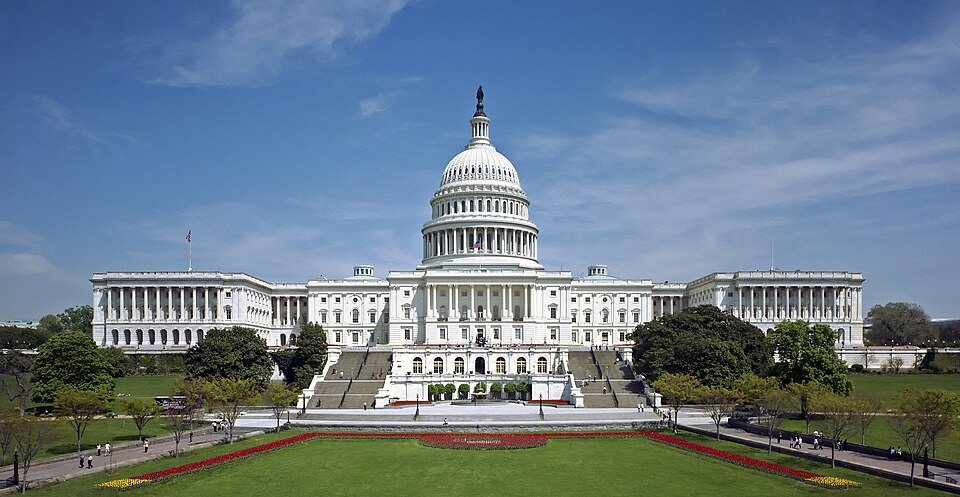
Dissent became disqualifying. A congressional committee’s final report in December 2022 laid out what it called the president’s “multi-part plan” to overturn the 2020 election. Ten months earlier, the Republican National Committee had censured Liz Cheney and Adam Kinzinger, the only two Republicans on that committee, for “participating in a Democrat-led persecution of ordinary citizens engaged in legitimate political discourse.”
Many of the people the movement now dismisses once defined the party. National Review, Buckley’s magazine, published an editorial titled “Against Trump” in January 2016. In October 2017, George W. Bush and John McCain each gave speeches defending free trade, alliances and immigration against what Bush called “nationalism distorted into nativism.” Their objections are part of the record that any honest answer has to weigh.
What Did Not Change
A fair test also has to count what held. On taxes, MAGA is continuous with Reagan. The 2025 tax and spending law made permanent the 2017 tax cuts from Trump’s first term, the same bet on lower rates that Reagan made.
On the courts, the movement delivered what the conservative legal project had sought for forty years. Trump appointed three justices, and in 2022 all three joined the majority in Dobbs v. Jackson Women’s Health Organization, which overruled Roe v. Wade. On regulation, the second administration revived and expanded the first’s deregulation orders, a goal set out in the Heritage Foundation’s Project 2025.
Abortion politics is continuity with a twist. Every platform from 1980 to 2016 supported a constitutional amendment to protect unborn life nationally. The 2024 platform instead said the power had been returned “to the States and to a vote of the People” and promised to oppose only late-term abortion. On this one issue the MAGA platform is less absolute than the party’s older ones. Taken together, these continuities are why many lifelong Republicans see MAGA as their party winning, not their party lost.
The Strongest Case Against the Thesis
“MAGA is the Republican Party now. Calling it un-Republican is just sour grapes from the establishment.”
MAGA did win the party’s voters and offices. But measured against the party’s own platforms from 1980 to 2016, it reversed planks on free trade, Russia and Ukraine, executive power, bailouts and the balanced budget. It kept the tax cuts, the judges and deregulation. Both things are true, and the documents show which is which.
The best argument against the thesis is that parties are coalitions, not creeds. In its proponents’ own words, from the 2024 platform’s preamble, politicians “sold our jobs and livelihoods to the highest bidders overseas with unfair Trade Deals and a blind faith in the siren song of globalism.” On this view the old platforms described what donors and consultants wanted, and Republican voters rejected it. A party belongs to its voters, and its voters chose Trump three times.
The voters did change. Pew Research Center’s study of validated 2024 voters found Trump won those without four-year college degrees by 14 points, double his 2016 margin, and rural voters by 40. The Republican Party became more working-class, less college-educated and more rural, much as the Democratic Party once lost the white South in the realignment the site covers elsewhere.
MAGA’s ideas also have Republican ancestors. The America First Committee of 1940 opposed aid to Britain before Pearl Harbor. The John Birch Society spread conspiracy theories that Buckley spent years fighting. Political scientists describe the common thread as populism: a politics that divides society into “the pure people” and “the corrupt elite.” What is new is that these strands, long kept at the edge of the party, now run it.
The record supports both readings. MAGA is Republican in the sense that it won the party’s voters, its offices and its machinery. It is not Republican in the sense the party used for itself from Eisenhower to Romney: on trade, alliances, executive power, federalism, market ownership and the balanced budget, the party’s own documents say the opposite of what the movement does.
Source: Pew Research Center, validated voters, 2024 election (published June 2025).
How American Parties Remake Themselves
American parties have changed identities before without changing names. The party of Lincoln became the party of the white South over a generation, and the party of the Solid South became the party of civil rights. The mechanism then was voters moving. The mechanism now has an additional piece: primaries.
In a district that reliably favors one party, the election that matters is the primary, and primary electorates are small. In 2018, Pew found, Republican House primaries drew 8.7 percent of registered voters. A member who breaks with the party’s leader faces a few highly motivated voters, not the general public. Comparative research adds a warning from the other direction: parties that blur what they stand for can collapse. American Republicans avoided that fate by changing the brand to match the leader.
Leader Parties Abroad
Parties organized around one leader are familiar elsewhere. Argentina’s Peronist movement, which rose around Juan Perón in the 1940s, still carries his name generations later; Noam Lupu’s study of party brands treats it as a party that survived when Argentina’s oldest party collapsed. The closer modern parallel for American conservatives is Hungary.
Viktor Orbán’s Fidesz party governed Hungary from 2010, rewrote the constitution, and became a model for parts of the American right. In 2022 the European Parliament declared Hungary “a hybrid regime of electoral autocracy.” In April 2026, Hungarian voters ousted Orbán after 16 years, days after Vice President JD Vance visited to campaign for him. The lesson cuts both ways: a leader-centered party can capture a state, and voters can still remove it.
The New Right and the Old Conservatism
Some of MAGA’s intellectuals concede the break and embrace it. The post-liberal right argues that the old fusion of free markets and social conservatism failed. Patrick Deneen’s Why Liberalism Failed (2018) argues that liberalism itself is built on contradictions, trumpeting equal rights while fostering deep inequality. Post-liberals and national conservatives want a stronger state that uses its power on behalf of community, family, religion and nation, which is a deliberate break with the limited-government conservatism of Goldwater and Reagan.
That is a real philosophy, but it is not the one the party taught for sixty years. Edmund Burke, whom most conservatives treat as their founder, argued for cautious, piecemeal change. Kirk asked for prudence and restraint on power. The Stanford Encyclopedia of Philosophy’s entry on conservatism draws the line in one sentence: “It is reaction and not conservatism that is inherently authoritarian.” Whether MAGA is conservative in that older sense is a separate question from whether it is Republican, and on the documented record the answer to both is mostly no.