What Green Politics Is
A political tradition that makes protecting the natural environment central to politics and links it to social justice, grassroots democracy and nonviolence. Britannica describes the Greens as environmentalist or ecology-oriented political parties that formed beginning in the 1970s. The first national party known as the Greens, Die Grünen, was founded in West Germany in 1979, and the movement soon spread across Europe and beyond (the German party).
The Global Greens Charter, signed in 2001, distills the creed into six principles: ecological wisdom, social justice, participatory democracy, nonviolence, sustainability and respect for diversity (the charter). The first of these is the defining one, a requirement that humans live within Earth’s ecological and natural resource limits. What separates a green party from an environmental group is that it takes that claim into elections and governments.
Who Owns It: Mixed Ownership, Smaller Units and Limits on Growth
Green politics has no single ownership model. Britannica says the 1980 program of the German Greens called for breaking up large economic enterprises into smaller units, among other proposals. The Global Greens Charter pledges signatories to a fair, equitable and stable world economy and to governing economic globalization by sustainability principles.
The sharper economic claim is about growth. The Club of Rome’s 1972 Limits to Growth report argued that exponential growth could not continue on a finite planet, and the later idea of degrowth says rich economies must reduce resource use. Greens differ on how far to go.
Who Rules: Grassroots Democracy, Coalitions and Tension
The creed is participatory democracy, which the Global Greens Charter defines as a form of government that empowers individuals through transparent and democratic electoral systems. The German party came from the “new social movements” of the 1970s (environmental, anti-nuclear, peace and women’s movements) under the motto “Neither left nor right, but ahead” (the movements behind the party).
In practice Greens have governed as junior partners. A state-level red-green coalition began in Hesse in 1985, and the first federal coalition, with the Social Democrats, in 1998 (entering government). The party’s history is a story of two factions, the fundamentalists who opposed compromise and the realists who wanted change from within (the split). Britannica says the party experienced almost constant ideological tensions between its left wing and a more pragmatic faction.
What Greens Believe
The diagnosis is overshoot: that growth in population, industry, resource use and pollution will exceed what the Earth can carry. The Club of Rome’s 1972 report, built on the MIT-developed World3 model, suggested that without substantial changes in policy humanity would surpass the Earth’s capacity, leading to collapse. The model was criticized as too simplistic and rigid, and it was refined into the more complex World Integrated Model in the mid-1970s and later updates, but the argument shaped the movement (the critique). Ecological economists took up the idea: Georgescu-Roegen’s 1971 work and the Limits to Growth report are the sources degrowth scholars cite.
The remedy is a change in how societies measure progress and organize themselves. The Global Greens Charter pairs ecological limits with social justice, which, in the Charter, rests on a fair, equitable and stable world economy, the eradication of poverty and equal rights for all. On human nature, the Charter’s principle of nonviolence stresses cooperation, sound economic and social development, and peace between and within states.
What Greens Value
The Charter lists the principles in this order: ecological wisdom first, then social justice, participatory democracy, nonviolence, sustainability and respect for diversity, which the Charter says spans cultures, languages, ethnic groups, spiritual traditions and sexual orientations. The Charter commits signatories to limiting atmospheric carbon dioxide to 450 parts per million, one of its specific goals.
What Greens will trade away is growth, and some prosperity, in the strongest versions. Kallis and colleagues, in the Economics Observatory’s summary, say slowing the economy “is not an end but a likely outcome” of a transition toward equitable well-being and environmental sustainability. The strength of that claim is disputed in the literature.
A Short History of Green Politics
The first green party was Australian. The United Tasmania Group formed on March 23, 1972 to oppose the dam that flooded Lake Pedder, and Britannica calls it the world’s first green political party. In 1979 West Germany’s Greens were founded by Herbert Gruhl, Petra Kelly and others, through the merger of about 250 ecological groups (Petra Kelly); they became a national party in 1980 and entered the Bundestag in 1983 with 5.6 percent of the vote.

By the end of the 1980s almost every country in western and northern Europe had a green party. The European Greens were founded in 1984, Australia’s Greens coalesced nationally in 1992, and in 1999 the Greens in the European Parliament joined the European Free Alliance (the bloc). After the 2001 Charter, the 2010s brought gains: Caroline Lucas became Britain’s first Green MP in 2010, Canada elected its first in 2011, and Alexander Van der Bellen became Austria’s president in 2016.
The Branches of Green Politics
Greens split along two axes. On strategy, the fundamentalists wanted opposition and the realists wanted office. On ideas, the family includes parliamentary Green parties, the degrowth movement of ecological economists, and radical ecology inside the anarchist tradition (Murray Bookchin’s social ecology).
The British Green Party split in 1990 into the Green Party of England and Wales, the Scottish Green Party and the Green Party Northern Ireland. Regional and national movements are part of the family too: in 1999 the Greens joined the European Free Alliance, whose representatives advocate for national groups lacking their own state. Britannica records Green parties in Canada, Argentina, Chile, New Zealand and the United States, and notes that after the revolutions of 1989 Green groups began to emerge in eastern Europe.
Where It Has Been Tried
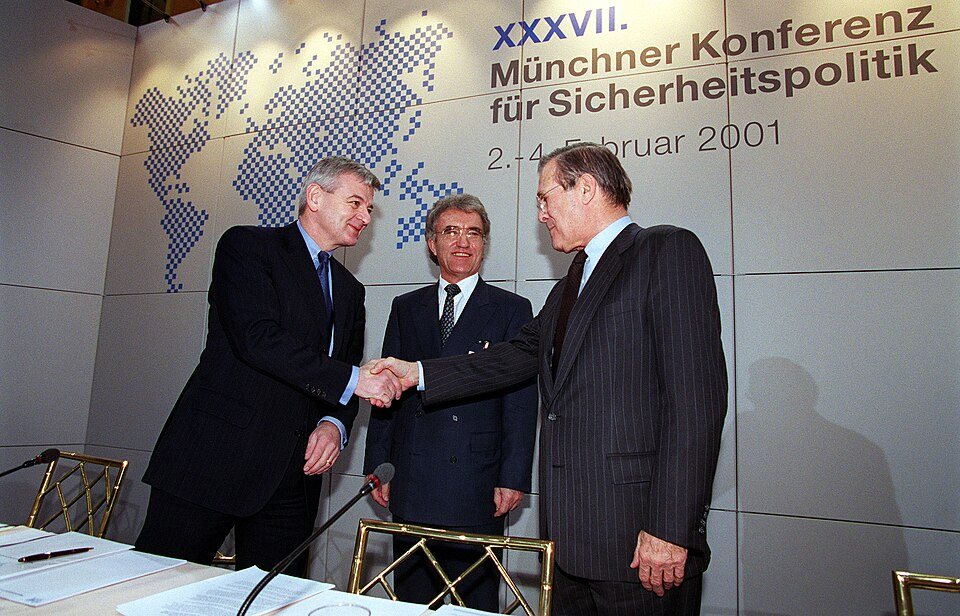
No country has been governed by a green party alone. Greens have governed in coalitions. In Germany they joined the first federal government in 1998, with Joschka Fischer as foreign minister and vice-chancellor and Jurgen Trittin as environment minister (Fischer), and entered government a second time in 2021. Their 1998 campaign was burdened by a call for a gradual rise in the petrol price to five marks (the 1998 result).
In 2020 the Greens entered government in Austria and Ireland, as junior partners to Sebastian Kurz’s People’s Party and to Fianna Fail under Micheal Martin. In 2026 Britain’s Greens won their first parliamentary by-election in what had been a safe Labour seat (Britain and Canada).
The Case for It and the Case Against It
“Greens want to shut down the economy.”
Kallis and colleagues write that degrowth is “not the same as saying that the degrowth goal is to reduce GDP”: slowing the economy is “a likely outcome” of reducing resource use, not an end. The Global Greens Charter calls for a fair, stable economy and the eradication of poverty, not contraction as such.
Defenders say the Greens put planetary limits on the political agenda early. The Limits to Growth report had been cited 34,920 times by September 2024 on Google Scholar, per the Economics Observatory, far more than the later concept of degrowth. Greens had their best result in the European Parliament in 2019, when the Greens/EFA group rose from 50 to 74 seats.
Critics say the argument is flawed in method and politics. The model behind Limits to Growth was called too simplistic and rigid, degrowth has been criticized for ambiguity and lack of conceptual coherence, and the economists who study it disagree about it. Voters have punished Green parties at the ballot box, as in 2024, and the 1998 German campaign was burdened by a petrol-price proposal.
What Green Politics Is Not
“The Greens are just the left under another name.”
The German party’s founding motto was “Neither left nor right, but ahead.” In 2020 Austria’s Greens became junior partners to the center-right People’s Party, and Ireland’s to Fianna Fail. Britannica adds that the 1980 program drew in many members of the Social Democrats’ left wing.
It is not the same as environmentalism: Greens are parties with programs on democracy, peace and the economy, as well as the environment. Britannica says the German Greens’ 1980 program also called for dismantling both the Warsaw Pact and NATO. It is not simply left-wing: the German party’s motto was “Neither left nor right, but ahead,” though its program attracted many members of the Social Democrats’ left wing.
Nor is it a single party. There are national Green parties, a European party and a Global Greens network that signed the 2001 Charter, and the United States has its own Green Party. They differ widely on economics, and on how much to compromise.
Green Politics Today
The movement is both established and under pressure. In the 2024 European elections the Greens/EFA group fell from 74 seats to 53, 7.36 percent of seats, moving from fourth-largest to sixth (the 2024 result). The LSE’s account is that the Ukraine war and the cost-of-living crisis pushed climate down the agenda.
Britannica reports Hannah Spencer’s by-election win in 2026 as Britain’s Greens’ first. Degrowth remains a niche idea in economics, the Economics Observatory says, though the Limits to Growth tradition behind it is widely cited.
The Economics Observatory adds that degrowth has a range of definitions, that reviews of the research reach contrasting conclusions, and that some scholars suspect its rising popularity reflects stagnation in Western European economies as much as argument. Green parties, meanwhile, face the question the 1998 German campaign raised: how to win votes for policies that raise costs now to avoid damage later.