What Democracy Is
A system of government in which the people rule, directly or through elected representatives, under rules that let them choose and remove their leaders. Britannica says the word means literally rule by the people, from the Greek dēmokratia, coined from dēmos (“people”) and kratos (“rule”) in the middle of the 5th century BCE for the systems then existing in some Greek city-states, notably Athens (Athens).
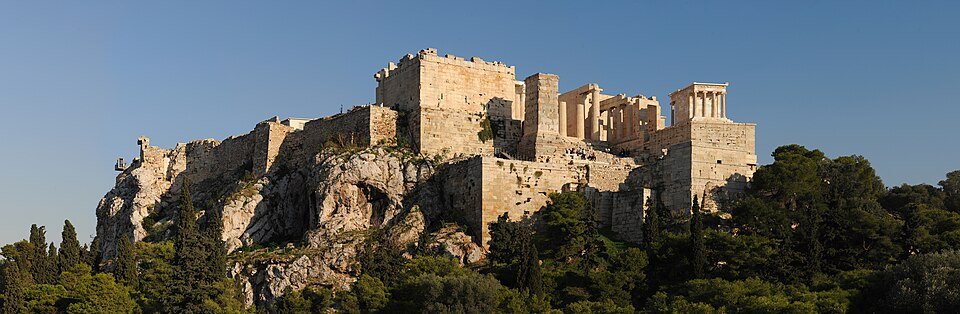
Any democracy has to answer a set of questions, Britannica says: within what unit, who counts as a citizen, how citizens govern, whose views prevail when they differ, and why the people should rule at all (the questions). The answers have changed. Athens excluded most adults from the dēmos, and a modern democrat could argue it was not really a democracy; today the right to take part extends to nearly all adults.
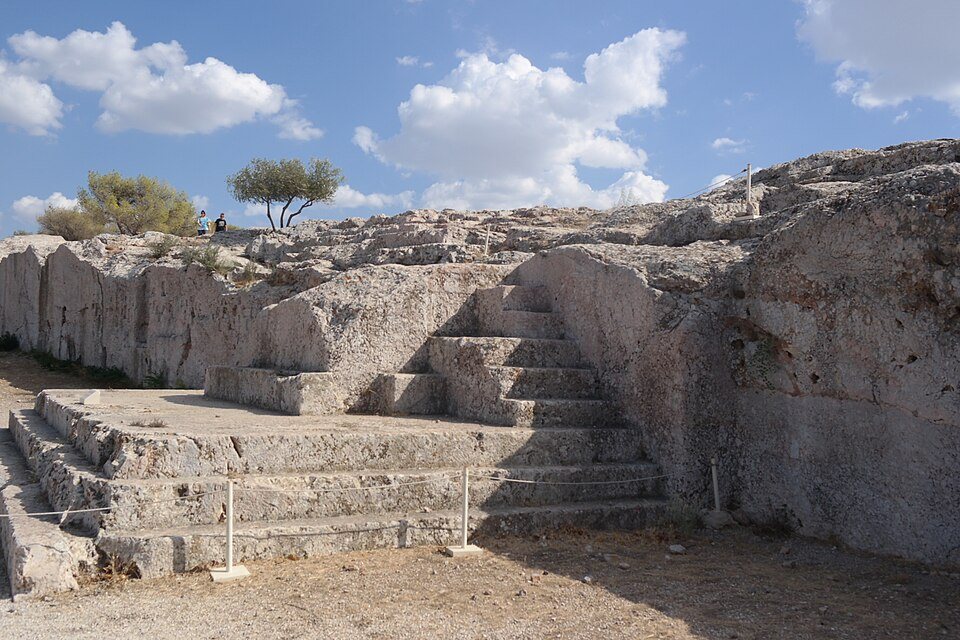
The oldest democracies were small. Athens set its agenda through a Council of Five Hundred chosen by lot, and its Assembly met about forty times a year. Modern democracies are large, so they rely on elections, parties and constitutions, and Britannica calls the shift from assembly to representation a transformation so sweeping that Athenians might not have recognized it.
Who Rules: Citizens, Through Votes and Limits on Power
In a democracy, voters hold the final say. In small associations they can decide directly, by assembly. In nation-states, Britannica says, direct democracy gave way to representative democracy, in which citizens elect those who govern (the shift). The power of the voters has limits. Because majorities can overrun minorities, democracies add a bill of rights, supermajority rules, separation of powers, judicial review and federalism (the limits).
How much real rule voters have is itself debated. Joseph Schumpeter held that citizens vote but know too little to rule, and that elections are mostly “a fairly peaceful way of maintaining or changing those who rule,” with the people able to “throw the bums out” when leaders act badly (Schumpeter’s view).
Who Owns It: Democracy Has Run Alongside Several Economies
Democracy says nothing about ownership. The 2025 Democracy Index’s top spots are held by the Nordic countries, whose economies mix markets with large welfare states, and Britannica notes that democracy spread as market economies replaced highly centralized state-controlled ones. In centralized economies, it says, leaders could use their access to economic resources to reward allies and punish critics (markets and democracy).
That does not make capitalism a requirement: Britannica adds that the conditions market economies need, such as reliable information, education, freedom of movement and the rule of law, also help democracy, and that economic well-being improves the odds that a new democracy survives.
The Claim to Rule
The claim is that legitimate authority comes from the governed. Britannica asks the question directly: why should the people rule, and is democracy really better than aristocracy or monarchy? Plato argued in the Republic that the best government would be led by a minority of the most qualified, “philosopher-kings” (Plato’s objection).
Defenders give two kinds of answer, according to the Stanford Encyclopedia of Philosophy. Instrumental arguments say democracy produces better results: leaders who can be removed tend to avoid disasters. Intrinsic arguments say people have a right to take part in the decisions that govern them. Schumpeter’s elite theory fits the instrumental case but opposes the intrinsic one.
What It Promises and What It Asks
It promises equal standing as a citizen, a say in who governs, and the ability to remove leaders without violence. Madison wrote in 1833 that republican governments are preferred because they are “the least imperfect,” and that the “vital principle” of them is the will of the majority (Madison’s letter).
It asks a great deal in return. Majorities must accept limits on what they can do to minorities. Losers must accept defeat. And, Britannica says, a democracy cannot last if a majority of the people or the government believe another form is better, so a substantial proportion of both must believe in popular government (the conditions).
A Short History of Democracy
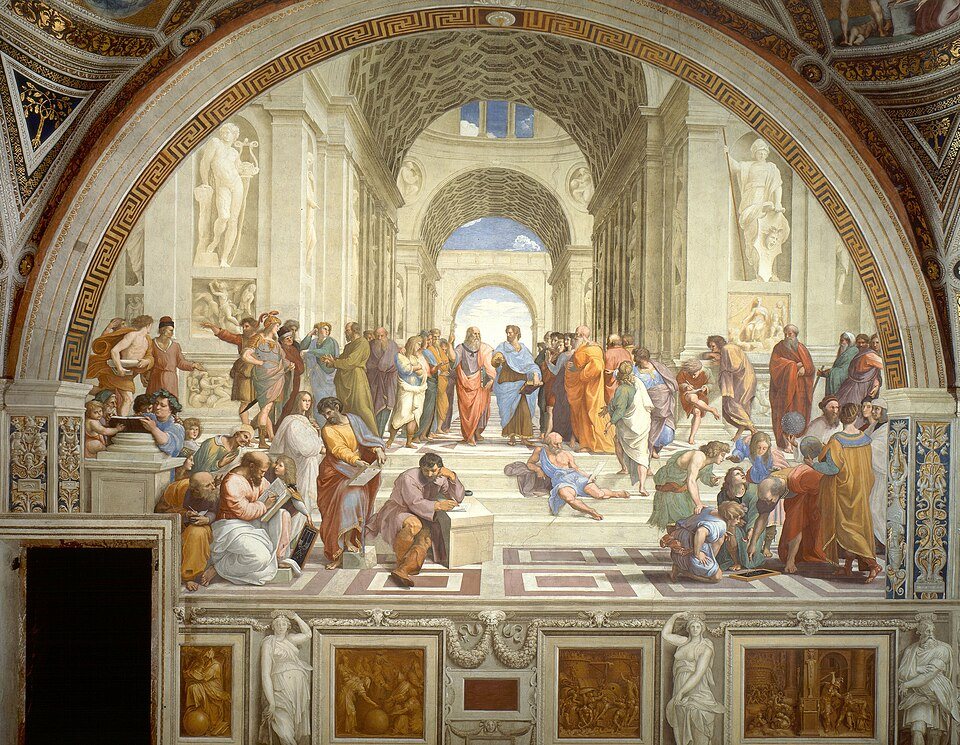
Britannica says democracy in a broad sense existed among tribal groups for thousands of years, then largely vanished among settled peoples, replaced by monarchy, despotism, aristocracy and oligarchy. About 500 BCE conditions favorable to it reappeared. Athens under Cleisthenes began a system of popular rule in 507 BCE that lasted nearly two centuries. Rome added a republic (Rome and the size dilemma).
Modern democracy was invented for large states. Beginning in the 18th century, representative institutions made democracy possible at the scale of France or the United States. In the 20th century the right to participate spread to nearly all adults, and by its end more than a third of the world’s nominally independent countries had democratic institutions comparable to the older democracies (the spread). Freedom House counts 2025 as the 20th straight year of decline.
The Forms of Democracy
Britannica distinguishes direct democracy, by assembly, from representative democracy. Electoral arrangements vary enormously. Representative systems differ: presidential or parliamentary (the executive), unitary or federal (the state), proportional or winner-take-all in elections, two-party or multiparty, majoritarian or consensual.
A further distinction, used in V-Dem’s measures, separates liberal from electoral democracy: the first adds judicial and legislative constraints on the executive, protection of civil liberties and equality before the law (the distinction). Britannica’s account of democratic theory also names Mill, Dewey, Habermas and Rawls.
Where It Rules and Where It Ruled
Athens ruled itself by assembly for nearly two centuries. In the modern world, counts depend on who measures. The EIU’s 2025 Democracy Index lists 26 full democracies and 48 flawed ones among 167 countries (the EIU count). Freedom House rates 88 countries Free. V-Dem finds nearly a quarter of nations backsliding and 18 democratizing, with Brazil and Poland among the latter (V-Dem’s count).
The United States illustrates how the measures differ. V-Dem demoted it from liberal to electoral democracy in 2026, the EIU ranks it a flawed democracy at 34th, and Freedom House gives it 81 points, the sharpest drop among Free countries (the three ratings).
The Case for It and the Case Against It
“Democracy means majority rule, so minorities lose.”
Democracies built barriers to unrestrained majorities: a bill of rights, supermajorities for key laws, separation of powers, judicial review and federalism, Britannica says. Madison, who feared majority tyranny, wrote in 1833 that majority government was nonetheless the least imperfect. Democracy and liberal democracy are not identical; the second adds the constraints.
Defenders note that every main alternative failed. Britannica says the Allied victory in World War I discredited monarchy, aristocracy and oligarchy as legitimate systems, fascism fell with Germany and Italy in World War II, Soviet-style communism collapsed in 1990 and 1991, and Latin American military dictatorships faded in the 1980s and 1990s. Madison called majority government “the least imperfect.”
Critics say it is prone to majority tyranny and that most citizens know too little to rule. Pew’s spring 2026 survey of 16 high-income countries found a median of 54 percent dissatisfied with how democracy works, 45 percent satisfied, with American Democrats (86 percent) and Republicans (51 percent) both mostly dissatisfied (the survey).
What Democracy Is Not
“Any country that holds elections is a democracy.”
The EIU counts 32 hybrid regimes and 61 authoritarian regimes among 167 countries, many of which hold elections. V-Dem’s coverage describes a “democratic shell” in which elections are free and fair but checks and balances are compromised. Freedom House says only 21 percent of people live in countries rated Free.
It is not the same as holding elections. V-Dem’s coverage distinguishes democracies from autocracies, in which power is concentrated in one person, and from a “democratic shell” where multiparty elections are free and fair but key checks and balances are severely compromised; the UTS summary puts 74 percent of the world’s people in autocracies and 19 percent in that shell. The EIU separates 32 hybrid regimes and 61 authoritarian ones from the democracies.
It is also not the same as liberalism. Liberalism limits what governments may do to individuals, and democracy decides who governs. Many democracies are liberal, but V-Dem’s “electoral democracy” is a democracy without the full set of liberal protections.
Democracy Today
The numbers vary by source but point the same way. Freedom House: global freedom declined for the 20th consecutive year in 2025, and 21 percent of the world’s people live in Free countries, down from 46 percent two decades ago. V-Dem: for the average global citizen, democracy is back to its 1978 level. The EIU: after eight years of decline, 2025 scores stabilized, the global average edging up from 5.17 to 5.19.
V-Dem’s director, Staffan Lindberg, warned that the 2026 American midterm elections “will be a critical test” for the quality of elections and democracy, and that if election indicators also decline the United States will fall even further. Europe and North America are now part of the story: six of ten newly autocratizing countries in V-Dem’s 2026 report are there, including Italy, the United Kingdom and the United States. Satisfaction with democracy is low in many places: around three in four Greeks are dissatisfied, and a similar share of Swedes are satisfied.