One Pattern, Many Faiths
On November 18, 1978, 918 people died in Guyana, most of them in a settlement called Jonestown, built by the Peoples Temple of Jim Jones. Twenty-two years later, in southwestern Uganda, at least 700 members of a Catholic splinter movement died when the church at Kanungu was nailed shut and burned. In between, a Japanese yoga group released nerve gas on the Tokyo subway, and a commune in Oregon poisoned salad bars to sway a county election.
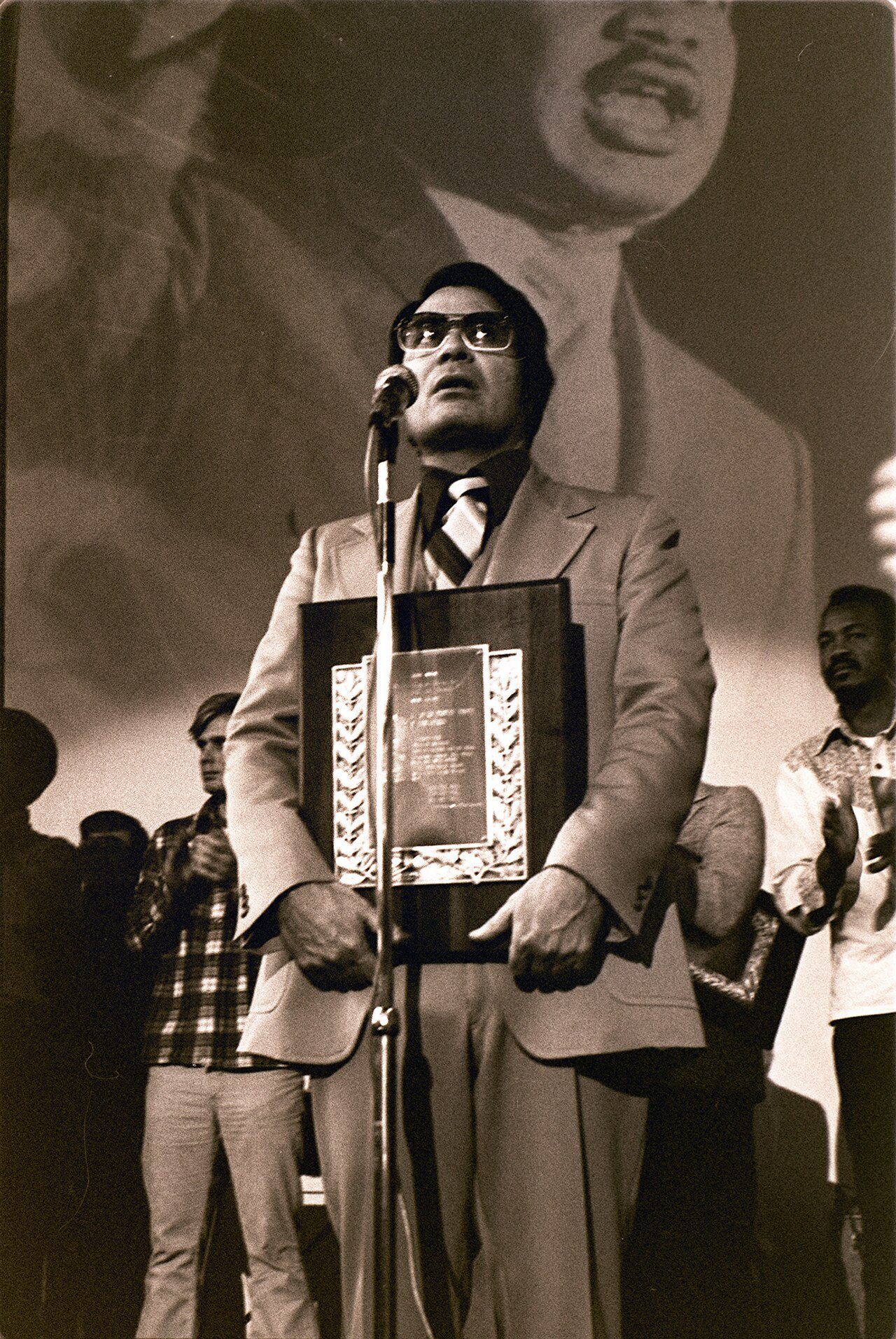
The beliefs could hardly be more different: Marxist Pentecostalism, Marian visions, Buddhist and Hindu apocalypse, an Indian guru’s free-love meditation. The structure was the same. Each group was organized around one person whose word was final, sealed its members off from outside information, took control of their money, their time and their sex lives, set a deadline for the end of the world, and made leaving more costly than staying.
Most groups that outsiders call cults never kill anyone, and most new religions are not cults in any useful sense. The cases that ended in catastrophe are worth studying because they ran the same playbook to its end, and because the court records, autopsies and government reports they produced document each move.
The Record, Case by Case
The case histories span seven decades and five continents. In Oregon, the followers of an Indian guru built a city of about 7,000 people on a cattle ranch in the early 1980s, and its leaders were later convicted of crimes that included the largest bioterror attack in American history. In Japan, Aum Shinrikyo recruited scientists from the country’s best universities and used them to make sarin. In Switzerland and Quebec, the Order of the Solar Temple left 74 dead between 1994 and 1997.
In Texas, the standoff at the Branch Davidians’ Mount Carmel center in 1993 began with a raid that killed four federal agents and ended 51 days later in a fire. In Brooklyn in 2019, a jury convicted the founder of a self-help company called NXIVM of racketeering and sex trafficking. In Japan in 2026, the courts finished dissolving the national arm of the Unification Church, a case that began with the assassination of a former prime minister.
The most recent is also among the worst. Between April and July 2023, Kenyan authorities exhumed 429 bodies from the Shakahola forest near Malindi, the followers of a preacher who told them to starve themselves to meet Jesus. In November 2026 a court in Mombasa sentenced him to 200 years in prison.
Authority That Rests on One Person
The sociologist Max Weber described three ways a ruler wins obedience: through tradition, through law and office, and through charisma, a claim to extraordinary personal gifts that followers accept and reward with devotion. Charismatic authority has no rulebook to appeal against. The leader’s word is the rule, so a revelation on Tuesday can overturn the doctrine of Monday.
Charisma is granted, not possessed. Jim Jones began as a preacher in Indianapolis who drew a few hundred congregants; his members later called him Father, then Dad, and the title deepened as the group closed in on itself. The people who granted him that authority were not fools. A sociologist’s breakdown of who joined the Peoples Temple shows a mostly Black, mostly Christian urban congregation joined by young white idealists, nearly all of them drawn by its commitment to racial justice and shared wealth.
What the research says about the leaders themselves is thinner than the popular picture. No leader in these cases was examined by clinicians while in power. The record does show patterns that recur: heavy drug use in Jones’s final year, Asahara’s incapacity at trial, a leader’s absence or illness that inner-circle members filled. It also shows the succession problem that Weber predicted: charisma cannot be handed down, so groups either harden into institutions or splinter when the founder dies.
A Closed World of Meaning
Every group in the record built a private language that made the outside world unreadable. Jones borrowed from the Black Panthers and turned revolutionary suicide from a phrase about dying in struggle into a rationale for mass death. The vocabulary sorts every event, including the leader’s failures, into proof that the group is right. The sibling page on cult psychology covers the research on loaded language and thought reform; here the point is structural.
The same structure governs the four things a person can use to leave: sex, money, time and information. NXIVM required recruits to surrender collateral, compromising material held against departure. The FLDS prophet alone performed marriages and could reassign wives and children to other men. Japan’s courts found that the Unification Church took money through coerced spiritual sales. Jonestown filled every hour with work, meetings and public punishments, and staged White Nights in which members pledged to die for the cause.
Children are the strongest hold of all. The most bitter fight in the Peoples Temple’s history was a custody battle over a boy whom Jones claimed as his son. In the FLDS, in the Family International and in Shakahola, children were the people with the least choice and, in the end, the largest share of the dead.
Relocation and the Deadline
Distance does what rules cannot. Jones chose a remote corner of Guyana, and nearly a thousand members followed him there in 1977 after a vetting process that required them to sell homes, close accounts and leave jobs. The Rajneeshees bought a 64,000-acre ranch in rural Wasco County. A German preacher took his followers to Chile and built Colonia Dignidad, where they were cut off for decades. Mackenzie moved his flock into a forest. Each move made the leader the only source of food, news and law.
Then comes the clock. Kanungu’s leaders preached that the world would end with the millennium. Heaven’s Gate believed a spacecraft trailed the Hale-Bopp comet. Aum members have said they believed Asahara’s prophecy of an apocalypse. A deadline creates urgency that overrides doubt, and it creates a crisis when it passes.
What happens when prophecy fails is less settled than the famous answer. A 1956 study, When Prophecy Fails, argued that a flying-saucer group doubled down after its doomsday passed, the founding story of cognitive dissonance. Archival work published in 2026 contends that the group mostly gave up. In the catastrophic cases the leader did neither: he moved the date, or ended the waiting himself.
The Inner Circle and the Enforcers
No leader in the record acted alone. Between the prophet and the followers sits an inner circle that keeps the books, writes the rules, recruits, punishes and, at the end, carries out the orders. Aum Shinrikyo’s chemists made the sarin. Rajneesh’s secretary ran the city and, by her guru’s later account, plotted the poisonings. In NXIVM, a television actor recruited the women.
The inner circle is also where many cases break. Insiders hold the documents and know where the bodies are buried, sometimes literally. When the Rajneeshpuram leadership fled in 1985, the guru blamed Ma Anand Sheela. When prosecutors built the NXIVM case, Allison Mack and others pleaded guilty and cooperated. In Kenya, one of Mackenzie’s co-accused pleaded guilty to all 191 murder counts. In Uganda, by contrast, the four leaders of the Kanungu movement, among them Credonia Mwerinde, were never found, and no one was ever tried.
The pattern holds across beliefs. A sociologist who visited Rajneeshpuram ten times found that two-thirds of residents had four-year degrees or professional careers. Asahara recruited from Japan’s best universities. Competence does not protect a person from a closed group; it makes the person more useful to it.
When Outsiders Push
Outside pressure is how most of these groups are stopped, and how some of them are pushed over the edge. The Concerned Relatives, former members and families of people in Jonestown, organized letters, lawsuits and press coverage until a congressman agreed to go and see. Leo Ryan’s visit in November 1978 was the trigger Jones used to order the deaths.

Waco is the case the government studied hardest. On February 28, 1993, agents of the Bureau of Alcohol, Tobacco and Firearms raided the Branch Davidians’ Mount Carmel center to serve warrants; four agents were killed and twenty wounded. The FBI took over a 51-day standoff, and on April 19 armored vehicles breached the building and inserted tear gas. Fire broke out, and David Koresh and about 75 followers died. Former Senator John Danforth’s special counsel investigation concluded in 2000 that the government did not start the fire or shoot at the Davidians, and that some officials had concealed the use of pyrotechnic tear gas rounds for six years.
Scholars of religion drew a different lesson: the FBI, as two of them argued, treated an apocalyptic Bible study as a hostage crisis and ignored what the Davidians believed, which made the government’s moves look like the fulfillment of Koresh’s prophecy. Both lessons hold. The Danforth findings settle who lit the fire. They do not answer whether a slower approach could have brought more people out.
The Word and the Fight Over It
Scholars of religion mostly avoid the word cult. Sociologists once used it as a neutral category for small, new, high-commitment groups, but by the 1970s the popular meaning, a dangerous group run by brainwashing, had taken over. Many researchers switched to new religious movement, a term critics say launders abusive groups. The disagreement is real and it matters, because it decides whether a group is studied, prosecuted or left alone.
The fight was not only academic. In the 1970s and 1980s, families hired deprogrammers to seize adult children from groups and hold them until they renounced their faith. The most important anti-cult organization, the Cult Awareness Network, fell after a deprogramming case in which an 18-year-old Pentecostal was abducted and a jury held the network liable. In bankruptcy, its name and phone line were bought by a lawyer who was a Scientologist.
Today the field is split between scholarly centers that study new religions without the cult label and organizations that help former members. The psychology of how people are drawn in and how they leave, from Robert Jay Lifton’s thought-reform criteria to Steven Hassan’s BITE model, is the subject of the sibling page on cult psychology.
What the Courts Can Reach
Belief is protected; conduct is not. Every successful case in the record prosecuted something a court could measure. Scientology officials were convicted in the Guardian’s Office case of plotting to steal government documents, not for their doctrine. Sun Myung Moon was convicted of tax fraud. Warren Jeffs was convicted of sexually assaulting girls he had married. Keith Raniere was convicted of racketeering and sex trafficking, Shoko Asahara of murder, Paul Mackenzie of murder by starvation.
The hardest cases involve children, because removing them can do its own harm. In April 2008 Texas removed more than 400 children from the FLDS Yearning for Zion Ranch; within weeks, two courts ruled that the state had acted unlawfully. Evidence seized in the raid still convicted Jeffs and ten other men. Civil courts reach where criminal ones cannot: the Japanese order against the Unification Church rested on civil findings of coerced donations, not on any criminal conviction.
For survivors, the record is mixed. A 2000 review in Clinical Psychology Review found that people entering these groups are not unusually disturbed, that current members often appear well adjusted, and that a substantial minority of former members struggle after leaving. Children raised inside, who never chose to join, are the least studied and often the most affected.
Spinoff: The Cult of Personality in Power
The phrase cult of personality entered political language through a single speech. In February 1956, at a closed session of the Soviet Communist Party congress, Nikita Khrushchev denounced the cult that had grown around Stalin, a cult that had begun in earnest in 1929 with a celebration of a birthday Stalin had falsified. Khrushchev’s description matches the case record: one man made into a figure who knows everything, sees everything and thinks for everyone.
China’s Communist Party did something similar in 1981, when it formally blamed a growing personality cult for Mao Zedong’s errors and the disaster of the Cultural Revolution. North Korea never repudiated its founder. A United Nations commission of inquiry found in 2014 that the state runs an indoctrination machine from childhood to manufacture absolute obedience to the Supreme Leader.
Scholars use cult of personality as a term of art for state propaganda, not as a claim that a country is a religious sect. The overlap is in the tools: a leader beyond criticism, control of information, rituals of devotion, punishment of doubt and an enemy outside the gates. The difference is scale. A state cult does not need to relocate anyone. It owns the borders.
Spinoff: Livestreams, Pandemics and the Workplace
The internet removed the need for a compound. Love Has Won, a very online New Age group whose leader her followers called Mother God, shared its teaching through chats and livestreams; when she died in 2021, members drove her body more than a thousand miles and kept it as a shrine. The case shows the old pattern in a new medium: a leader treated as divine, followers cut off from ordinary medicine, and an online audience that substituted for a commune.
Older-style groups adapted too. South Korea’s Shincheonji Church of Jesus, whose followers believe its founder will lead 144,000 people to heaven, became the center of the country’s first large COVID-19 outbreak in 2020. Its leader was acquitted of obstructing the epidemic response but convicted of embezzlement.
The same dynamics appear in secular organizations. Management scholars have described corporate cultism, in which a charismatic executive, a totalizing company culture and the suppression of dissent reproduce the structure of a closed group inside a business. NXIVM itself sold its program as executive training. The warning signs are the ones in this record, transposed: a founder above criticism, a vocabulary only insiders understand, all of a person’s time and identity absorbed by the organization, and a high price for leaving.
Spinoff: The Women Who Ran Them and the Women Who Ended Them
Most leaders in the record were men, and most of their victims were women and children. The inner circles, though, often ran on women. Ma Anand Sheela ran Rajneeshpuram; women made up 54 percent of its residents, many of them highly educated professionals. In NXIVM, women recruited women, and the most senior of them pleaded guilty. In Uganda, Credonia Mwerinde shared the leadership of the Kanungu movement at its top.
Women also brought these groups down. Deborah Layton, a Peoples Temple member who got out, became one of its most widely heard witnesses. Grace Stoen fought for her son through the courts and joined the Concerned Relatives. In NXIVM, women who had been recruited into DOS testified at trial, and the case against Raniere rested on their evidence.
Neither role is surprising once the structure is clear. A closed group needs administrators and recruiters with credibility among the people they recruit. It also produces witnesses, and the people with the most to lose, those whose children, marriages and bodies the group controls, are often the first to see what it is.