Real Conspiracies Are Caught by Evidence
“The government has lied before, so why would you trust it about this?”
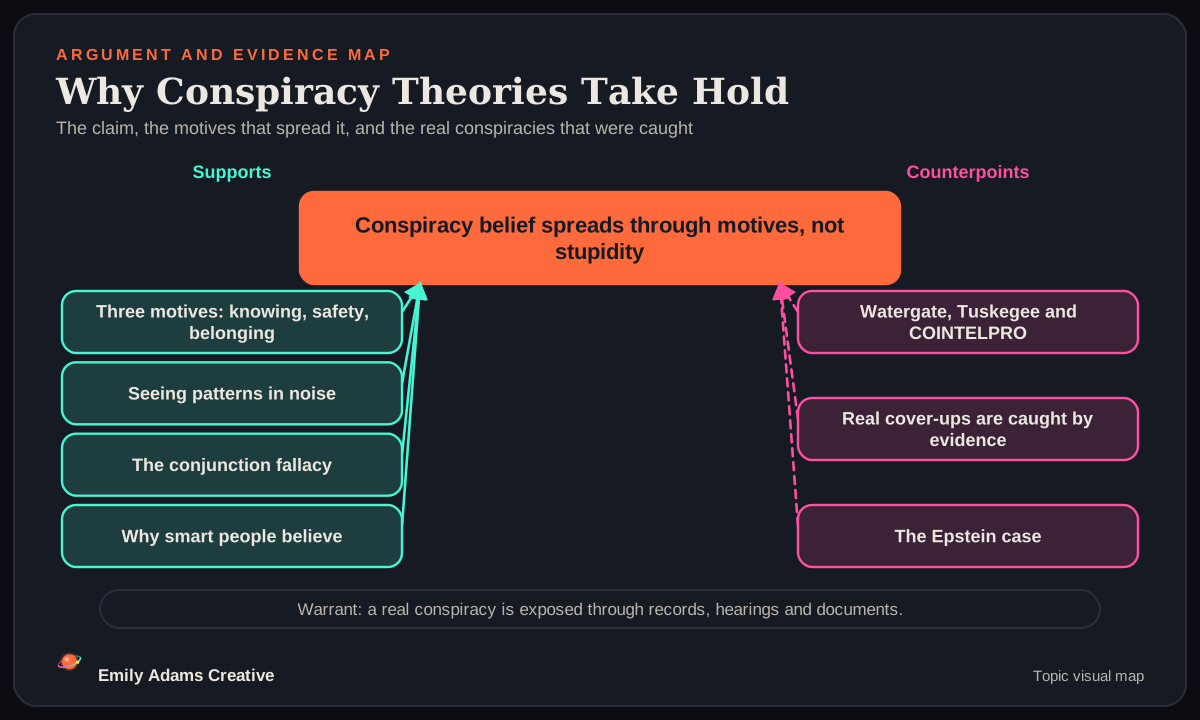
It has lied before, and we know because the lies were exposed: Watergate by reporters and subpoenas, Tuskegee by a whistleblower, COINTELPRO by stolen FBI files the Senate later confirmed. That is the standard. A real plot leaves documents and witnesses. Show me the documents for this one.
Early on June 17, 1972, police arrested five men inside the Democratic National Committee offices at the Watergate complex in Washington. Two years later President Richard Nixon resigned. Watergate was a real conspiracy, and it was not alone. The federal government ran the Tuskegee syphilis study for 40 years. The FBI ran COINTELPRO against activists. The CIA ran MKUltra, dosing unwitting people with LSD. The Reagan administration ran the Iran-Contra arms deals. Tobacco companies spent decades manufacturing doubt about cancer, a story told in full on the site’s Doubt Is Our Product page. In 1962 the Joint Chiefs of Staff even sent the secretary of defense a list of fake attacks that could justify invading Cuba, a set of proposals known as Operation Northwoods.
Look at how each one came out. Burglars carried files out of an FBI office in Pennsylvania and mailed them to reporters. A public health worker took Tuskegee to the press. Reporters, a special prosecutor, Senate committees, and court subpoenas did the rest. The CIA destroyed most MKUltra records in 1973, and a Senate committee still documented the program from the files that survived. Real conspiracies are exposed by documents, whistleblowers, and investigators, and the findings hold up in court and in the archives. The physicist David Robert Grimes used exactly these cases to estimate how long a large secret can last, and the answer is not long.
A conspiracy theory runs the other direction. It starts from the conclusion that a powerful group secretly caused an event, and it reads the missing evidence as proof of how good the cover-up is. The psychologists Karen Douglas, Robbie Sutton, and Aleksandra Cichocka describe conspiracy theories as explanations of important events as secret plots by powerful and malevolent groups. Distrust is not foolish in a country that has lived through Tuskegee and COINTELPRO. The difference is method. The real plots were proven with records anyone can read. The theories ask for faith that the records were hidden.
Why Smart People Believe
Intelligence offers less protection than people assume, because conspiracy belief feeds needs everyone has. Douglas, Sutton, and Cichocka sort them into three groups: epistemic (wanting to understand what happened), existential (wanting to feel safe and in control), and social (wanting to feel good about yourself and your group). Their review found a twist. The research does not show that the theories meet those needs. Believers do not come away calmer or more in control. The theories are, in the authors’ words, more appealing than satisfying.
The brain’s shortcuts do the rest. People see patterns in randomness, and those who see more patterns in coin tosses and chaotic paintings believe more conspiracy theories. Big events seem to demand big causes, so a lone gunman feels too small for the death of a president. A habit of seeing purpose in events, the same bias linked to creationism, predicts conspiracy belief. Believers are also more prone to the conjunction fallacy, judging a detailed chain of events more likely than one link of it, which is exactly how a long theory with many moving parts can feel more convincing than a short one.
Then there is identity. A conspiracy theory offers secret knowledge, and studies on the need for uniqueness find that people who most want to stand out from the crowd believe more. Collective narcissism, the belief that your group is exceptional but not appreciated enough, predicts belief in plots by outsiders. A 2023 meta-analysis of 170 studies found the strongest correlates were seeing danger and threat everywhere, relying on intuition, and being antagonistic and feeling superior. None of these is a measure of IQ. They describe how a person relates to a frightening world, and anyone can be pushed toward them.
Not Rising, and Not One Party
It feels as if conspiracy belief has exploded. The best long-run data say otherwise. In 2022 the political scientist Joseph Uscinski and colleagues tracked 46 American conspiracy theories, some across half a century, plus beliefs in six European countries and a decade of surveys on general conspiracy thinking. In no case did they find a systematic increase. What changed is visibility: theories that once circulated in newsletters now trend online, and some now come from the podium.
Belief also clusters. People who accept one theory tend to accept others, even theories that contradict each other: in one British study, the more people believed Princess Diana faked her own death, the more they believed she was murdered. Researchers call this a conspiracy mentality, a general readiness to see plots, and it matters more than the details of any single story.
Who has that mentality? Education predicts lower belief, partly because it teaches that complex problems rarely have simple solutions and partly because it gives people a sense of control. Partisanship predicts which villain someone suspects more than whether they suspect one at all: a 2023 study of 52 theories found no consistent tilt to the left or the right, with the gap depending on which party the theory accuses. And belief tracks distrust: in a 2018 Monmouth poll, 74 percent of Americans said a deep state of unelected officials probably or definitely manipulates national policy.
An Old American Habit
The template is older than the country’s television sets. In 1797 a Scottish scientist, John Robison, published a book claiming that the Bavarian Illuminati, a secret society founded in 1776 and suppressed within a decade, had engineered the French Revolution. The next spring, the Boston-area minister Jedidiah Morse preached that the plot had reached America. In the 1820s and 1830s the Anti-Masonic movement became a political party, convinced that Freemasons controlled judges, sheriffs, and newspapers.
The 20th century added new villains to the same structure. The forged Protocols of the Elders of Zion claimed to reveal a Jewish plan for world rule. The John Birch Society, led by the retired candy manufacturer Robert Welch, saw communist agents throughout the government. In November 1964 the historian Richard Hofstadter named the pattern ‘the paranoid style,’ a mood of heated exaggeration, suspicion, and conspiratorial fantasy that he found in movements left and right.
The pattern returned in the 1980s as the Satanic Panic, when fears of ritual abuse in day care centers produced the longest criminal trial in American history and no convictions. The site’s Save the Children page traces that panic forward to Pizzagate and QAnon. What repeats is the shape: a hidden, organized enemy; a threat to children, faith, or nation; and a small band of the awakened who can see it.
The Classics: Dallas, the Moon, the Towers, the Desert
“Building 7 wasn’t hit by a plane and it still fell. That’s a controlled demolition.”
Federal engineers at NIST spent three years on Building 7. Fires burned uncontrolled for almost seven hours after the North Tower collapsed beside it, and heat expanded steel floor beams until a key column buckled. A demolition would have needed loud, visible charges that no recording or witness captured.
Some theories are so familiar they feel like folklore. Doubts about the Kennedy assassination are the most widely held: in 2023, 65 percent of Americans told Gallup that others besides Lee Harvey Oswald were involved. Unlike most theories, this one had official encouragement, because a House committee concluded in 1979 that Kennedy was probably killed as the result of a conspiracy, resting its finding of a second gunman on acoustical evidence. In 2025 the National Archives released the remaining classified Kennedy records.

The moon landing hoax has a smaller following, about 6 percent of Americans in a 1999 Gallup poll, and a direct refutation: orbiting cameras have since photographed the Apollo landing sites, down to the astronauts’ tracks. The 9/11 truth movement focuses on World Trade Center Building 7, which federal engineers found collapsed from fire. Roswell began as a 1947 debris recovery and grew into a story of captured aliens; in 2024 the Pentagon’s UFO office reported no evidence that the government has ever held extraterrestrial technology.
The flat earth revival shows the newest route in. Interviews at the first International Flat Earth Conference in 2017 found that most attendees had come to the idea within a few years, after watching videos on YouTube. The old theories survive because they answer the proportionality instinct and offer a hidden truth. The new ones spread faster because they arrive by recommendation.
Theories About Your Body
“Vaccines cause autism. Even the CDC admits it now.”
The CDC page was rewritten by political appointees in November 2025; the research did not change. A Danish study followed 657,461 children and found no higher autism risk with the MMR vaccine. The 1998 paper that started the scare was retracted, and the BMJ found it was fraudulent.
Health theories do the most direct damage, because people act on them with their children. The modern vaccine scare traces to a 1998 Lancet paper by Andrew Wakefield about 12 children, which the journal retracted in 2010 and the BMJ later called fraudulent. Since then, large studies have tested the claim, including a Danish study of 657,461 children that found no link between the MMR vaccine and autism. In November 2025 the CDC’s own website was rewritten to call the statement that vaccines do not cause autism ‘not an evidence-based claim,’ and scientists objected that the evidence had not changed.

Some health questions are real scientific debates, and they get mixed up with conspiracy versions. Fluoride is one: a 2024 federal review found, with moderate confidence, that fluoride levels above twice the U.S. recommendation are associated with lower IQ in children, which is a reasonable basis for debate about dosage and not evidence of a plot to poison the public. The origin of COVID-19 is another. Whether the virus spilled over from animals or leaked from a lab is a contested question that serious scientists and intelligence agencies have argued about. That is different from claims that the pandemic was planned, caused by 5G, or used to implant microchips, which have no evidence behind them.
Chemtrails show how a theory reaches law. In a 2016 survey, 76 of 77 atmospheric experts said they had seen no evidence of a secret spraying program. Since 2024, Tennessee, Florida, and other states have passed laws banning geoengineering anyway.
Theories About Power
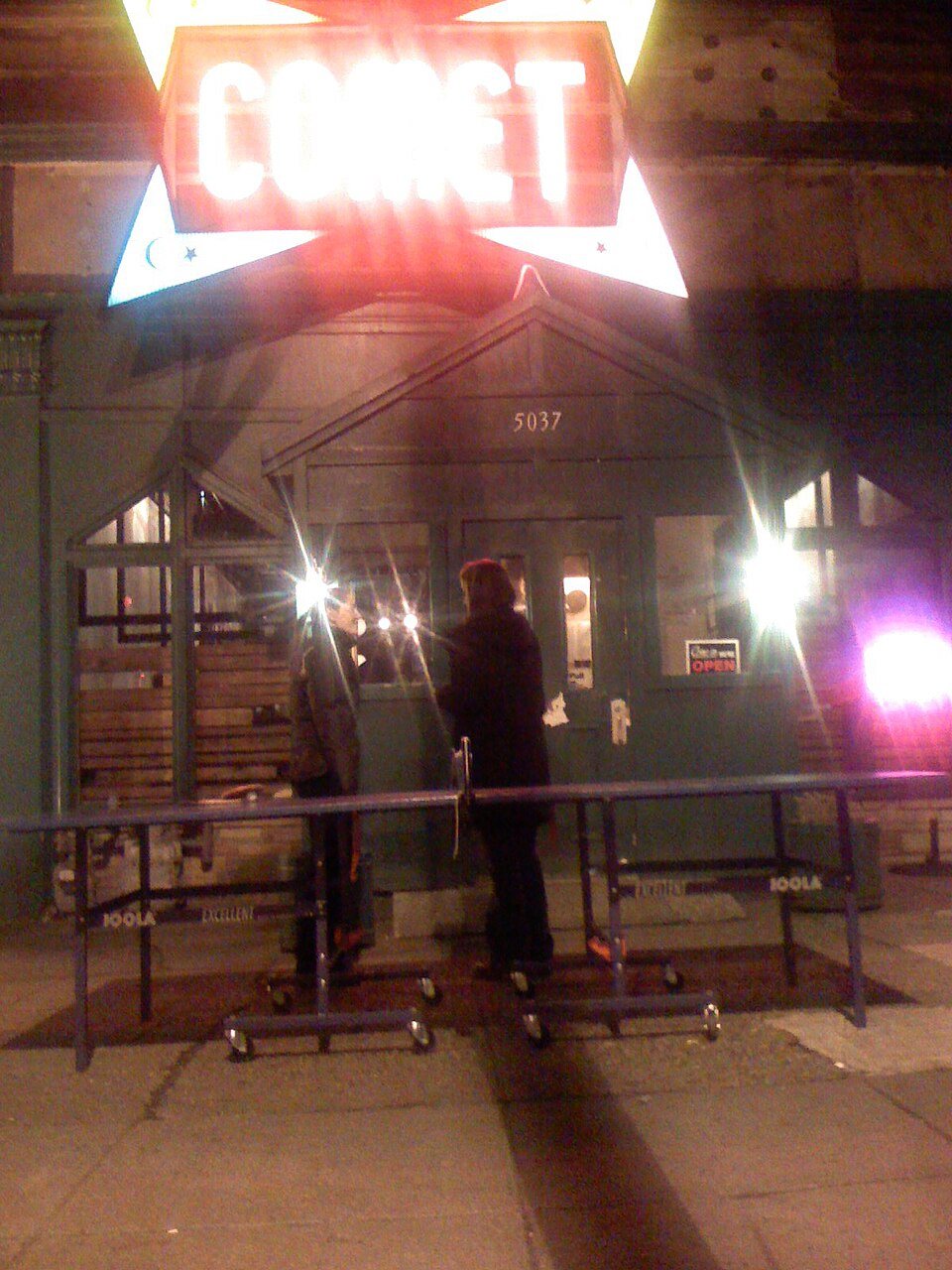
Political theories follow the same template with a partisan villain. Birtherism claimed Barack Obama was born abroad; the White House posted his long-form birth certificate in 2011, and Donald Trump, the claim’s loudest promoter, conceded in 2016. Pizzagate claimed a Washington pizzeria hid a child-trafficking ring tied to Hillary Clinton; in December 2016 a man fired an AR-15 inside it. Pizzagate grew into QAnon, whose core claims about Satan-worshipping elites were accepted by 18 percent of Americans in a 2022 survey.
The Great Replacement claims elites are importing immigrants to replace native-born voters; a third of American adults agreed with a version of it in 2022, and several mass shooters cited it. The stolen 2020 election claim ended in a $787.5 million defamation settlement paid by Fox News to Dominion Voting Systems. The New World Order and its local cousin, Agenda 21, recast international cooperation and city planning as a plan for global tyranny.
Each theory adapts to the news. When Hurricane Helene devastated western North Carolina in 2024, a member of Congress told millions of followers that ‘they can control the weather.’ The site’s It Worked Last Time series follows several of these stories back to their originals; the point here is the shared machinery.
Some theories place the rulers outside the human species. The reptilian elite story says shape-shifting reptiles run governments and banks through human hybrids. Its best-known version comes from the books of one writer, David Icke. In 2020 federal investigators examined whether the man who died in a bombing in Nashville had believed it.
What Belief Costs
Conspiracy theories are sometimes treated as harmless hobbies. The experiments say otherwise. In studies by Daniel Jolley and Karen Douglas, people who read conspiracy material became less willing to vote, less willing to cut their carbon footprint, and less willing to vaccinate a hypothetical child. The theories teach powerlessness: if everything is rigged, nothing you do matters.

Some believers act. A man fired a rifle inside a pizzeria to free children who were not there. Arsonists burned British phone masts over 5G. Several mass shooters wrote that they were stopping a replacement plot. And when a tragedy is recast as a hoax, the victims become targets. After the 2012 Sandy Hook shooting, which killed 20 children and six educators, Alex Jones told his audience for years that it was staged. Families testified that strangers accused them of faking their children’s deaths, and some moved away from Newtown.
The ‘hoax’ move has a name. Crisis actor and false flag claims hold that a shooting or attack was staged or committed by the government to justify a crackdown. They borrow plausibility from real documents like Operation Northwoods, then apply it to grieving parents. The harm is not only to the believers. It falls on the people the theory accuses.
The Business of Belief
Conspiracy theories are also products. Their sellers are sometimes called conspiracy entrepreneurs, and the model is simple: fear creates attention, attention sells products, and every debunking proves the seller is a threat to the powerful. Testimony in the Sandy Hook cases showed Jones’s audience and product sales grew when he made the shooting a topic. In the Texas Sandy Hook trial, a forensic economist estimated that Jones and his companies were worth up to $270 million.

The supply is concentrated. A 2021 analysis by the Center for Countering Digital Hate traced up to 65 percent of a sample of anti-vaccine content on Facebook and Twitter to 12 accounts. Much of that supply came through wellness culture, a merger that the sociologists Charlotte Ward and David Voas named conspirituality in 2011: the New Age belief in personal awakening joined to the conspiracy belief in a hidden elite.
Platforms are the distribution system, though the evidence on algorithms is more mixed than the popular story. Studies of YouTube found that recommendations of conspiracy videos fell after the company changed its system in 2019, and that most viewers of extreme content arrived by subscription or by links from elsewhere, not by being pushed down a rabbit hole by the algorithm. Demand matters as much as supply.
Why So Many Plots End With Jews
Follow enough conspiracy theories to their bottom and many arrive at the same place. The Illuminati, the New World Order, the ‘globalists,’ the bankers, the replacers: in a large share of versions, the hidden hand is Jewish. Researchers call this the antisemitic template, the oldest and most adaptable conspiracy story in the West.
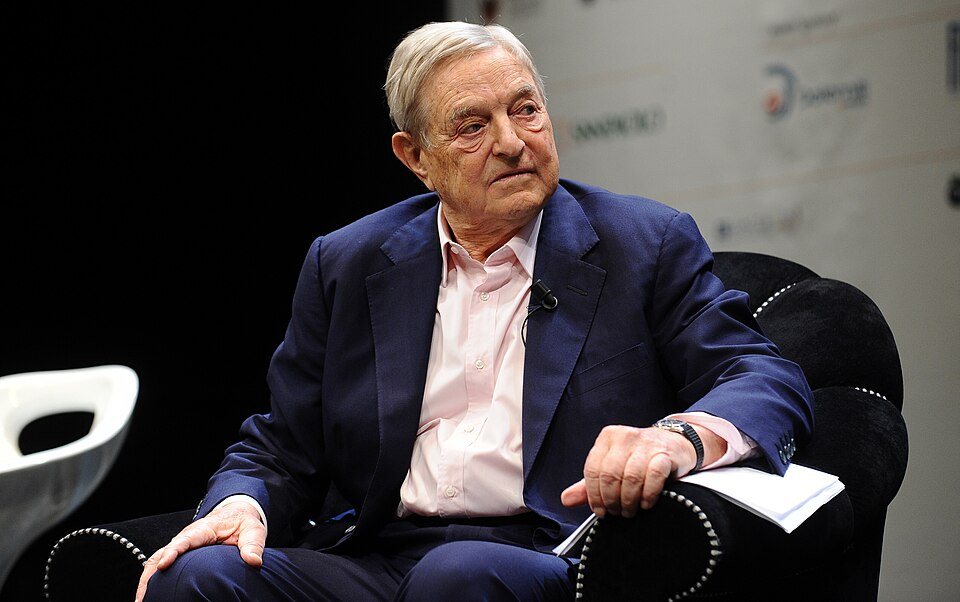
The modern currency of the template is George Soros, a Hungarian-born Holocaust survivor and billionaire donor to liberal causes, who is cast as the funder behind every protest, migrant caravan, and prosecutor the theorist dislikes. Funding causes openly is not a conspiracy. The theory turns one donor’s public giving into a secret puppet show, a picture drawn directly from the Protocols. The site’s International Bankers page traces how the ‘Jewish banker’ became the ‘international banker,’ then the ‘globalist.’
When the Crime Is Real: Epstein
Jeffrey Epstein is the hard case, because the documented crimes are worse than many theories. He pleaded guilty in Florida in 2008 to soliciting prostitution from someone under 18, after federal prosecutors agreed not to charge him. He was indicted on federal sex trafficking charges in 2019 and killed himself in a New York jail a month later. His confidant Ghislaine Maxwell was convicted of sex trafficking in 2021 and is serving 20 years.
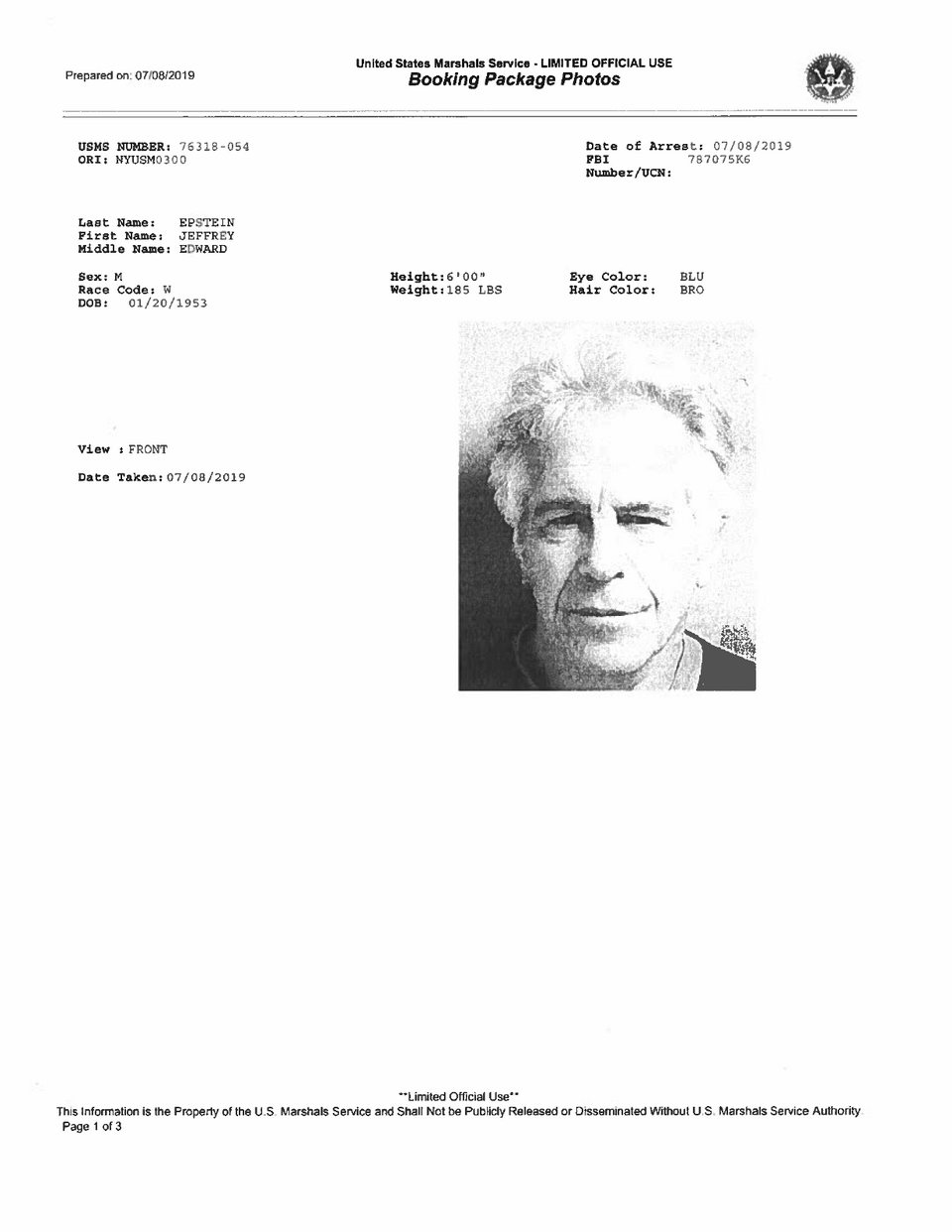
Around those facts grew theories: that he was murdered, that a ‘client list’ exists and is being hidden, that he ran a blackmail operation for an intelligence agency. Some questions are legitimate, and Congress passed the Epstein Files Transparency Act in 2025 to force the records out. The right response to a real scandal is the same as for any other claim: follow the documents, and separate what they show from what people wish they showed. The site’s Micromanage page includes a call script asking Congress to enforce the law.
What Actually Changes Minds
“You can’t argue someone out of a conspiracy theory. Facts don’t work on them.”
A 2024 study in Science found that conversations answering a believer’s specific evidence cut belief by about 20 percent, and the effect lasted two months. Generic fact sheets fail; tailored evidence works. Ask what convinced them, and answer that.
The most hopeful finding in this research is recent. In 2024 the psychologists Thomas Costello, Gordon Pennycook, and David Rand had 2,190 believers argue their favorite theory with an AI model that answered each person’s specific evidence. Belief fell by about 20 percent, the drop held two months later, and it held even for the most committed. A follow-up found the effect came from the evidence, not the machine: it worked just as well when people thought they were talking to a human expert. The old idea that believers cannot be reached by facts turns out to be half wrong. Generic facts fail. Facts that answer the believer’s own reasons work.
Prevention works better than cure. Prebunking, or inoculation, warns people about a manipulation technique before they meet it, and short videos tested on YouTube with millions of viewers improved people’s ability to spot those techniques. Order matters: in one experiment, arguments against anti-vaccine theories helped only when people read them before the theories. A 2023 review of 25 studies found that most attempts to reduce conspiracy belief failed, and that the ones that worked taught analytical thinking.
For a conversation with someone you love, the evidence points to moves that are not obvious. Ask which specific piece of evidence convinced them, then address that piece, because tailored answers are what moved people in the AI studies. Ask what evidence would change their mind; a theory that no evidence could disprove is a sign worth naming together. Use the fact, myth, fallacy, fact structure: lead with what is true, mention the myth once, explain the trick it uses, and end on the truth. Do not fear a backfire; researchers now find it rare. And remember what the motives research says: the theory is meeting a need for control, safety, or belonging, so offer those another way.
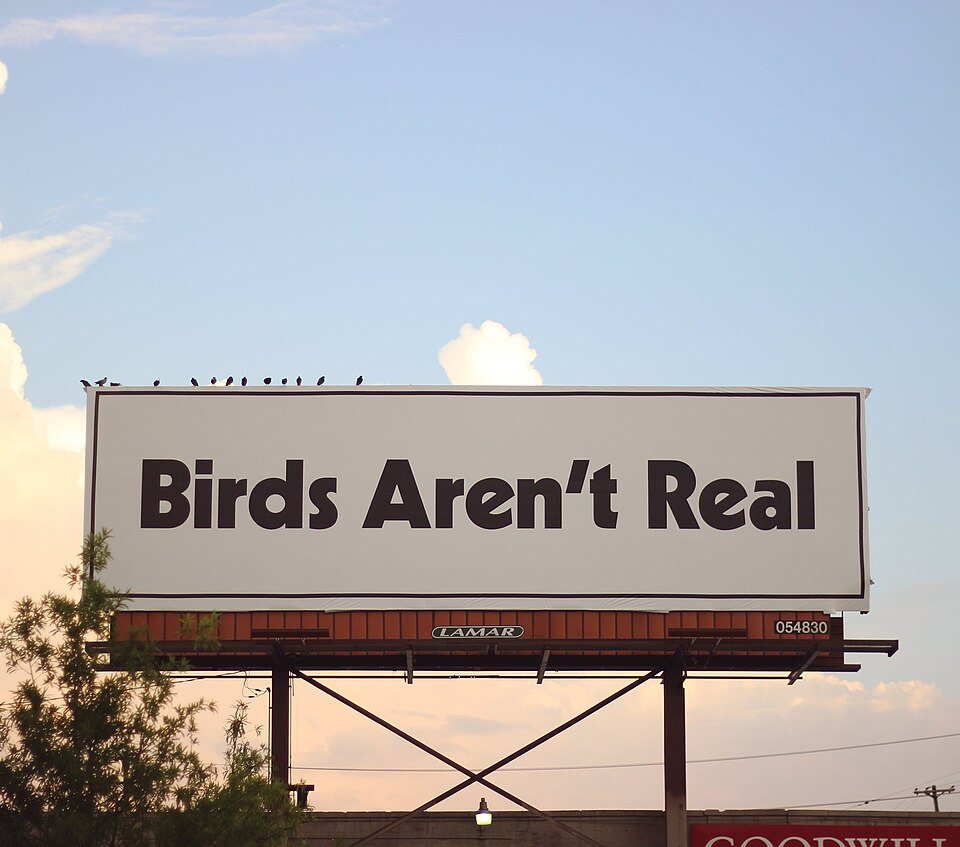
Mockery is the hard case. In one experiment, ridiculing a theory’s believers reduced belief about as much as rational argument did, and the satirical movement Birds Aren’t Real has used absurdity to teach a generation how misinformation is built. Laughter can work on bystanders. It rarely brings anyone back who feels laughed at, and that is the person most worth reaching.