Thirty Years of Deadlines
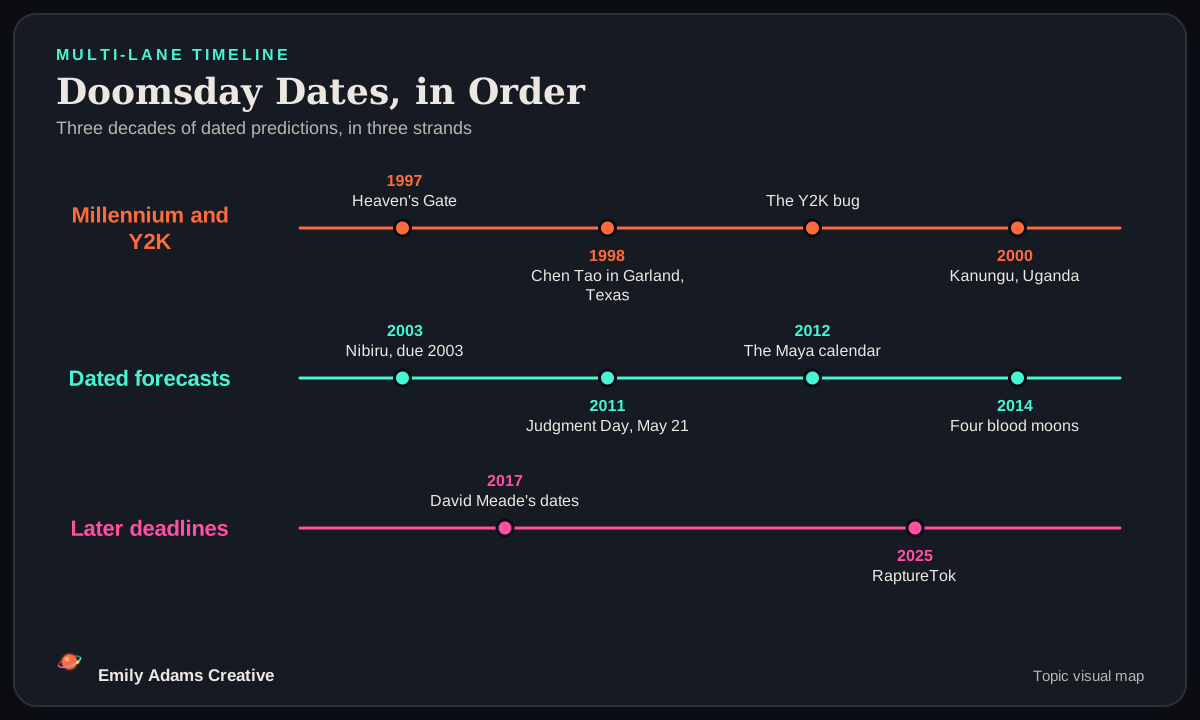
Between 1996 and 2026, the world was scheduled to end many times. A Taiwanese religious leader living in a Dallas suburb said God would appear on television in March 1998. An Oakland radio network paid for thousands of billboards announcing Judgment Day for May 21, 2011. A Wisconsin author tied a planet that does not exist to September 23, 2017. A South African pastor’s date for the Rapture, September 23, 2025, became a TikTok trend, then a second date, then a third. Every one of these deadlines passed.
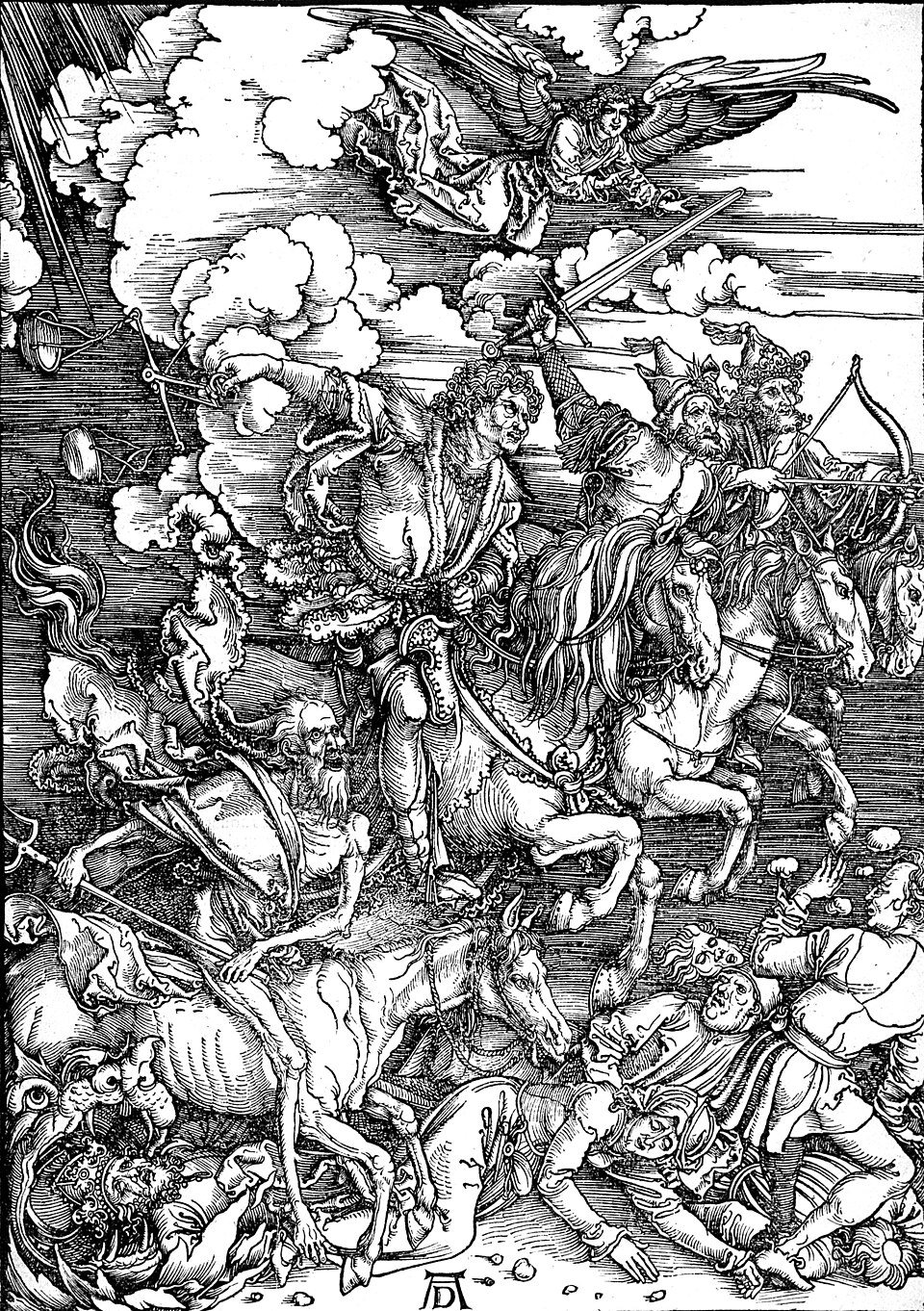
The predictions are only the visible part. In 2022, 39 percent of American adults told Pew Research Center that we are living in the end times. Most of them have never set a date and never will. Expecting history to end is an ordinary part of Christian, Jewish and Muslim belief, and it is not the same thing as announcing a day, selling a product against it, ordering followers to fast, or building a bomb.
Those differences matter more than the dates. Six things need to be kept apart: belief that the world will end someday, a dated prediction, propaganda that uses the end times to recruit, coercive control of followers, money made from the fear, and documented violence. It also keeps a seventh thing out of the prophecy column entirely: a conditional scientific warning, such as the Y2K bug, a climate pathway, or the Doomsday Clock, which says what will happen unless something changes.
The Millennium Deadlines, 1997 to 2000
The approach of the year 2000 concentrated expectation. In March 1997, 39 members of Heaven’s Gate died in a house near San Diego, believing a spacecraft trailing Comet Hale-Bopp would carry their souls away. A year later, the leader of Chen Tao gathered about 150 followers in Garland, Texas, to watch God arrive on channel 18. When the screen stayed blank, he said so in public, which almost no prophet does.

The most expensive millennial fear was also the one grounded in fact. The Y2K bug was a real flaw: older software stored years as two digits and could read 2000 as 1900. Around it grew a second, apocalyptic story about collapse and Armageddon. The engineering problem was fixed at a cost the Commerce Department put at more than $100 billion, and January 1, 2000 passed with scattered glitches. Calling Y2K a failed prophecy gets it backwards: the warning was conditional, and people acted on the condition.
Law enforcement took the religious version seriously too. In 1999 the FBI’s Project Megiddo warned that some militias and racist movements saw the millennium as a time for action. The deadliest millennial group, though, was not on American soil. In Uganda, the Movement for the Restoration of the Ten Commandments of God taught that the world would end at the turn of the millennium. When it did not, its members died in a locked, burning church at Kanungu on March 17, 2000.
Judgment Day, May 21, 2011
The best-financed prediction of the period came from Harold Camping, a retired civil engineer who ran Family Radio, a listener-supported Christian network based in Oakland. Camping calculated from biblical numbers that true believers would be taken to heaven on May 21, 2011, and that a giant earthquake would begin the destruction of everyone else. His ministry bought space on more than 5,000 billboards and sent caravans of painted recreational vehicles across the country.
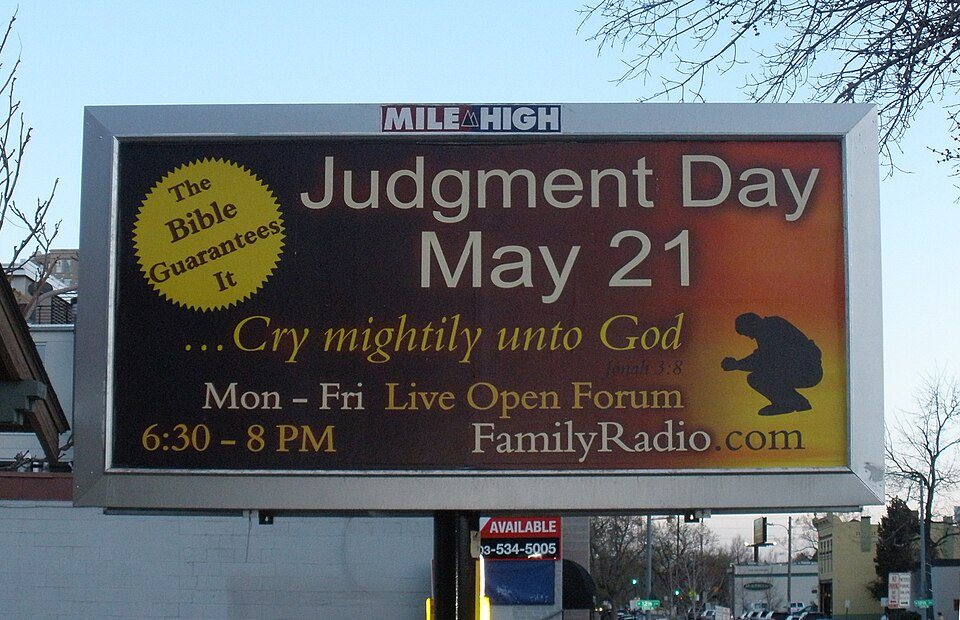
The money came from people who believed him. Family Radio’s own tax filings show how much it had, and how much it lost. Individual followers spent their own savings; one retired transit engineer, Robert Fitzpatrick, spent about $300,000 on advertisements. Some gave away their possessions, expecting not to need them.
When May 21 passed, Camping went on the air and said God had spared the world “hell on Earth for five months.” The destruction would come on October 21. That date passed too. In March 2012, he acknowledged he had been wrong, the rare prophet to say so, and Family Radio sold its largest stations.
From Planet X to RaptureTok, 2003 to 2026
After 2000, the dates moved online, and old predictions were recycled rather than retired. Nibiru, a planet said to be on a collision course with Earth, was due in May 2003. When it did not arrive, the date was moved to December 21, 2012, where it merged with a second story: that the Maya calendar predicted the end of the world. Maya scholars said the date marked the end of a calendar cycle and the start of a new era. China, where the film 2012 had been a hit, detained almost 1,000 members of a group called Almighty God for spreading rumors about the date.

Some claims were built to avoid a clean failure. A Texas megachurch pastor promoted the four Blood Moons of 2014 and 2015, a run of total lunar eclipses falling on Jewish holy days, saying “it’s fair to ask if there is significance here,” without saying what the significance was. Others were specific. David Meade, a self-published Wisconsin author, tied Nibiru to September 23, 2017. When that day passed, he announced October 15.
In 2025 the format changed again. A South African pastor’s vision of the Rapture on September 23 to 24, 2025, spread through a TikTok trend called RaptureTok, where sincere testimony sat beside parody. The date passed, and so did his revisions for October 2025 and October 2026.
Count of the specific dates in the cases covered: Chen Tao (2), Kanungu movement (1), Nibiru (1), Harold Camping (2), the Maya 2012 reading (1), David Meade (2), Joshua Mhlakela (3). Sources: CESNUR, BBC, NPR, National Geographic, The Washington Post, KSLA, ChurchLeaders.
What Happens When the Date Passes
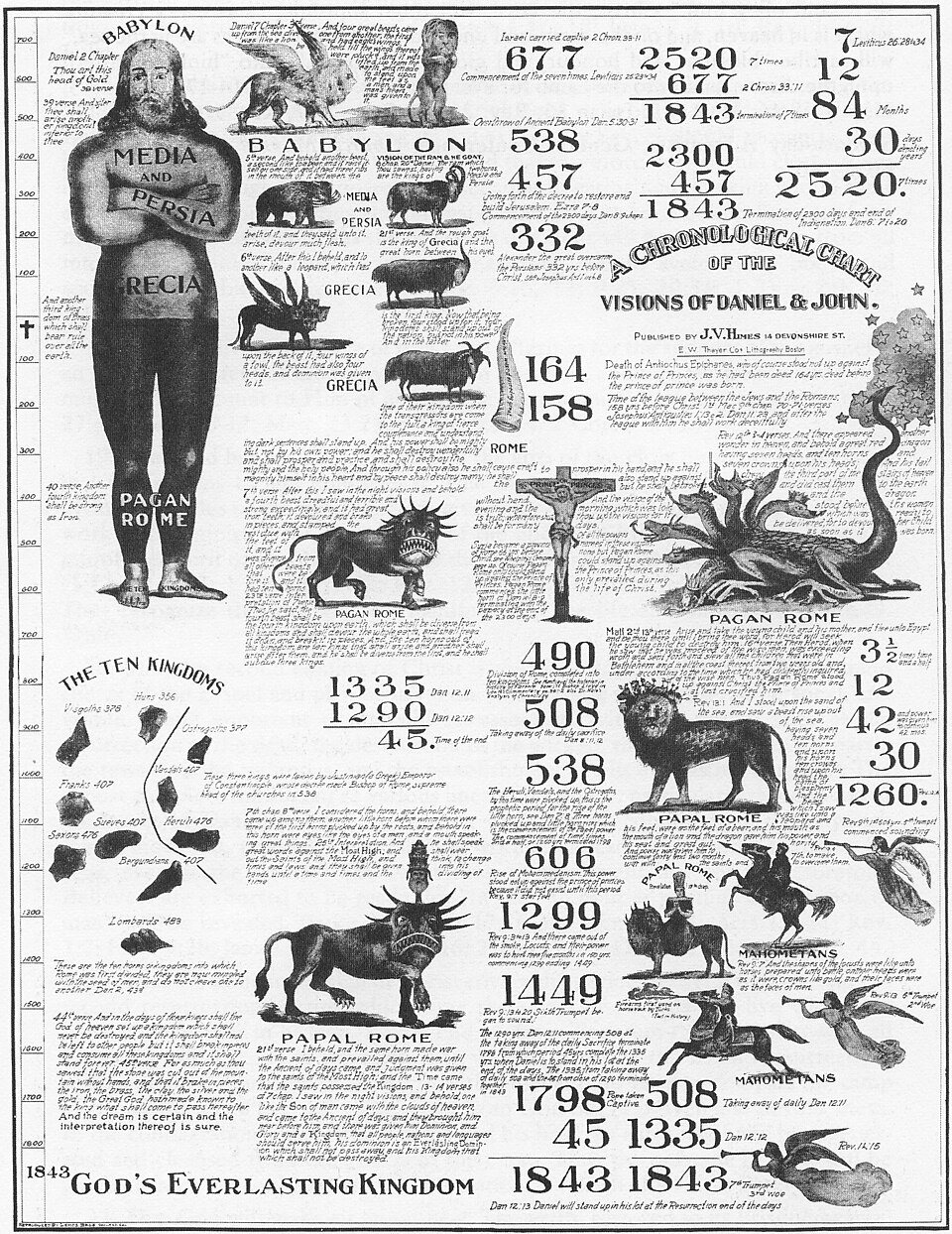
Every failed prophecy forces a choice, and the choices fall into a short list: admit the error, as Chen did in Garland; move the date, as Camping, Meade and Mhlakela did; reinterpret the event as spiritual or invisible; blame the followers for insufficient faith; or let the group fall apart. The template is older than the period. The followers of William Miller, a Baptist farmer and Bible student, expected Christ’s return on October 22, 1844, and called the morning after the Great Disappointment. Many gave up. A minority decided the date had been right and the event misidentified, and that reinterpretation became a founding doctrine of the Seventh-day Adventist Church.
For seventy years, the standard account of what happens next came from one book. When Prophecy Fails, published in 1956, reported that a small flying-saucer group doubled down and began recruiting after its flood failed to arrive, and it became the founding case for cognitive dissonance theory. Archival work published in 2025 found that the group had in fact recruited before the date and dissolved soon after it.
The same researcher then tested the broader claim that apocalyptic groups usually survive failure. His 2025 paper, Failed Prophecies Are Fatal, argues the field has been fooled by survivorship bias: groups that collapse leave few records, so scholars study the ones that endured. Among the documented cases, he finds, demise is the most common outcome. Groups that root predictions in a widely accepted authority, such as biblical interpretation, fare better than those built on a leader’s personal revelation. That pattern fits the period’s record. ISIS, whose prophecy rested on a well-known hadith, recast the meaning of its lost battlefield; Chen Tao, built on one man’s visions, scattered.
When End-Times Belief Turns Violent
Most people who expect the end of the world harm no one. The cases where apocalyptic belief and violence meet are few, and the standard for linking them has to be explicit: a group’s own texts, statements or court records must show that it expected or sought an end-times event and acted on that expectation. A killing that happens near the year 2000, or by a religious person, does not meet that standard on its own. Al-Qaeda’s attacks, for example, had religious justification, but a specific plan to bring on a dated apocalypse should not be assumed without evidence.
ISIS met the standard plainly. It named its English-language magazine after Dabiq, a Syrian town where a hadith places a final battle, and the Brookings Institution’s William McCants documented how the group used that prophecy in its propaganda from 2014 until the town fell in 2016.
The racist version of the end times runs from the Christian Identity movement the FBI tracked in 1999 to a secular successor, accelerationism, which treats the collapse of society as a goal to be hastened. Members of the neo-Nazi Atomwaffen Division were linked to murders and bomb plots, and the leader of the online Terrorgram Collective was sentenced in December 2025 to 30 years in federal prison for soliciting attacks.
The deadliest cases were not terrorism at all but coercion inside a closed group. At Kanungu in 2000 and in Kenya’s Shakahola forest more than two decades later, the end times were the reason given to followers for giving up their property, their children’s schooling, and finally their lives. In October 2026, a Kenyan court convicted the Shakahola pastor of 191 murders.
Who Believes, and Why
“Only a few fringe crazies believe the world is ending.”
In Pew Research Center’s 2022 survey, 39 percent of American adults said we are living in the end times, including 63 percent of evangelical Protestants. Most have never set a date. The problem is not the belief, which is old and widespread. It is the person who sets a date, sells against it, or demands sacrifices because of it.
End-times belief in the United States is common and unevenly spread. In Pew Research Center’s 2022 survey, 76 percent of Protestants in the historically Black tradition and 63 percent of evangelical Protestants said we are living in the end times, compared with 31 percent of mainline Protestants, 27 percent of Catholics, and 23 percent of the religiously unaffiliated. Forty-five percent of Republicans and Republican-leaning adults agreed, against 33 percent of Democrats and leaners. Belief also ran higher among Americans without college degrees and with lower incomes. These numbers measure a belief about the age we live in, not acceptance of any date and not support for violence.
A 2026 study in the Journal of Personality and Social Psychology found that end-of-world beliefs come in several distinct forms and predict how people judge real risks, from environmental to geopolitical. Research on related conspiracy beliefs finds three kinds of motive: the wish to understand events, the wish to feel safe and in control, and the wish to belong to a group that knows something others do not. Those motives describe tendencies, not a diagnosis, and the payoff is doubtful. Longitudinal studies find that such beliefs do not reduce anxiety and may feed it.
Fear of death is the most intuitive explanation and the least secure. Hundreds of experiments on mortality salience suggested that reminders of death make people cling harder to their worldviews, but a large replication in 2022 could not reproduce a classic version of the effect. Politics is not a clean explanation either. A 2024 analysis of 161,492 people in 27 countries found no consistent link between left-right identity and conspiracy thinking, while American research finds that Christian nationalism combined with biblical literalism predicts it. When the threat is ordinary rather than supernatural, the same impulses show up as doomsday prepping.
Source: Pew Research Center survey of 10,156 U.S. adults, April 11 to 17, 2022.
The Business of the End
“If these preachers didn’t believe it, they wouldn’t stake their reputations on it.”
Many do believe it. Belief and income are not opposites. Harold Camping’s Family Radio saw its net assets fall from $135 million to $29.2 million, according to tax records reported by CBS. Jim Bakker’s ministry settled a Missouri lawsuit over a product his show offered as a COVID-19 treatment. Sincerity does not make a date right.
Apocalyptic fear has a market: donations, books, films, supplements, survival goods and advertising. Revenue alone does not prove deception, and many sellers believe what they sell. The useful question is narrower: what does the seller gain if the audience keeps believing, and what happens to that income when a date fails?
Family Radio’s case shows the cost side, with net assets falling from $135 million to $29.2 million across the years of the campaign. Jim Bakker, the televangelist who rebuilt a ministry after prison, shows the product side. In early 2020, as COVID-19 spread, Missouri alleged that Bakker and a guest on his show claimed a product called Silver Solution, offered for contributions of $80 to $125, could treat the virus. The case ended in a 2021 settlement, not a conviction. David Meade’s new deadline arrived alongside a pitch for his book. John Hagee’s Blood Moons sign came with a theatrical release.
Online, the incentive no longer depends on belief at all. The Institute for Strategic Dialogue traced a network of YouTube and Telegram channels that used QAnon content to earn advertising money and sell merchandise to American audiences, apparently run from Vietnam. A prophecy that fails still generated views on the way to failing.
The Politics of the Last Days
Much of American end-times belief runs through one system of interpretation, dispensationalism, which divides history into eras and expects a sudden Rapture of believers, followed by seven years of tribulation centered on Israel. Its expectations are widely held: in 2010, 41 percent of Americans told Pew they expected Jesus to return by 2050.
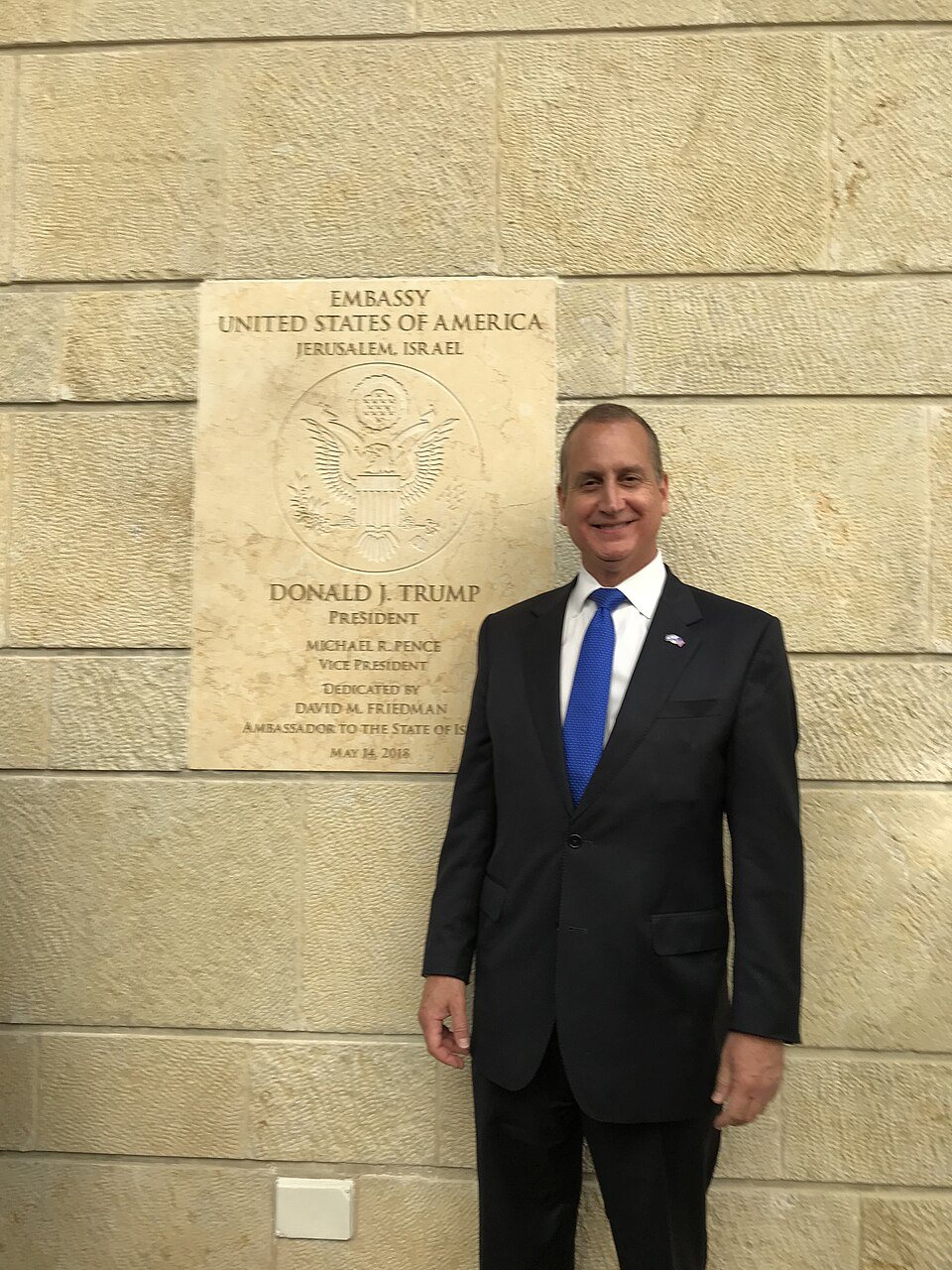
Because the system gives the modern State of Israel a role in the last days, it has a political edge. A 2020 survey of 1,000 evangelicals found that the belief that Israel’s existence fulfills prophecy was among the strongest ideological predictors of evangelical support for Israel, along with age, attitudes toward Jews and how often people heard other evangelicals talk about Israel.
How far that belief moves policy is where evidence has to be strict. The clearest case is the move of the U.S. embassy to Jerusalem in 2018. Evangelical leaders lobbied for it, and two of them prayed at the opening, but the BBC’s analysis credited the decision first to a campaign promise to a base that included right-wing American Jews as well as evangelicals. Prophecy belief was one input among several, and stating more than that goes beyond what the record shows.
Raised for the End
Children learn about invisible things, germs as well as God, mostly from people they trust. A 2023 review of the developmental research concluded that children lean toward natural explanations on their own and that religious exposure in childhood, not individual temperament, is the main predictor of religiosity in adulthood. A study of Chinese families found that Christian children shared their parents’ confidence in God even in a secular society where most people do not.
That makes the manner of teaching matter. A 2025 meta-analysis covering 126,423 participants found that psychologically controlling parenting, which works through guilt, shame and conditional approval, is linked to worse outcomes across cultures, and that support for a child’s autonomy is linked to better ones. Those findings apply to religious and secular homes alike.
What research has not established is the chain many critics assume: that childhood lessons about the Rapture or hell cause adult anxiety, extremism or susceptibility to date-setters. Former members of high-demand groups describe such fears, and those accounts deserve attention, but no longitudinal study has followed children from end-times teaching to adult outcomes. The evidence supports a narrower point: children believe what trusted adults present as certain, and how that certainty is delivered affects their well-being.
Leaving the Countdown
People leave apocalyptic movements for many reasons, and a failed date is only sometimes one of them. Researchers separate leaving a group, which is disengagement, from changing beliefs, which is deconversion or deradicalization, and from stopping crimes, which is desistance. The steps do not always arrive together: some former members keep the beliefs after leaving, as Robert Fitzpatrick, a decade after Camping’s date, still believed the campaign had served God’s purpose.
The aftermath varies widely. A study of 622 former members of fundamentalist Christian communities found four distinct well-being profiles, from resilient to adverse, and leaving because of abuse was the one membership factor clearly tied to worse well-being. Among former members of many kinds of groups, psychological abuse inside the group predicted later distress through damaged social functioning. Interviews with Swedish former members describe an in-between time after leaving, confusing and chaotic, eased most by talking with others who had left.
Prevention is more promising than rescue. A 2026 meta-analysis of 33 experiments found that prebunking, teaching people the manipulation techniques before they meet them, improves their ability to tell reliable claims from unreliable ones without making them distrust everything. The techniques of date-setting, a calculation no outsider can check, an urgent deadline, and a promise that doubters will be sorry, are teachable in advance.
Telling a Warning From a Prophecy
“Climate scientists said the world would end by 2030. They’re just doomsday prophets in lab coats.”
The 2018 IPCC report did not predict the world would end in 2030. It said pathways that limit warming to 1.5 degrees Celsius cut net carbon dioxide emissions about 45 percent from 2010 levels by 2030. That is a target with conditions attached, like the Y2K repair deadline, not a dated prophecy.
Not every prediction of catastrophe belongs in the same column. A dated prophecy names a day, rests on an authority no one else can check, and is not changed by anything people do. A conditional risk forecast names a danger, says what will make it more or less likely, and is checked by people with no stake in the result. When a prophecy’s date passes, it has failed. When a warning’s danger does not arrive, the warning may have worked.
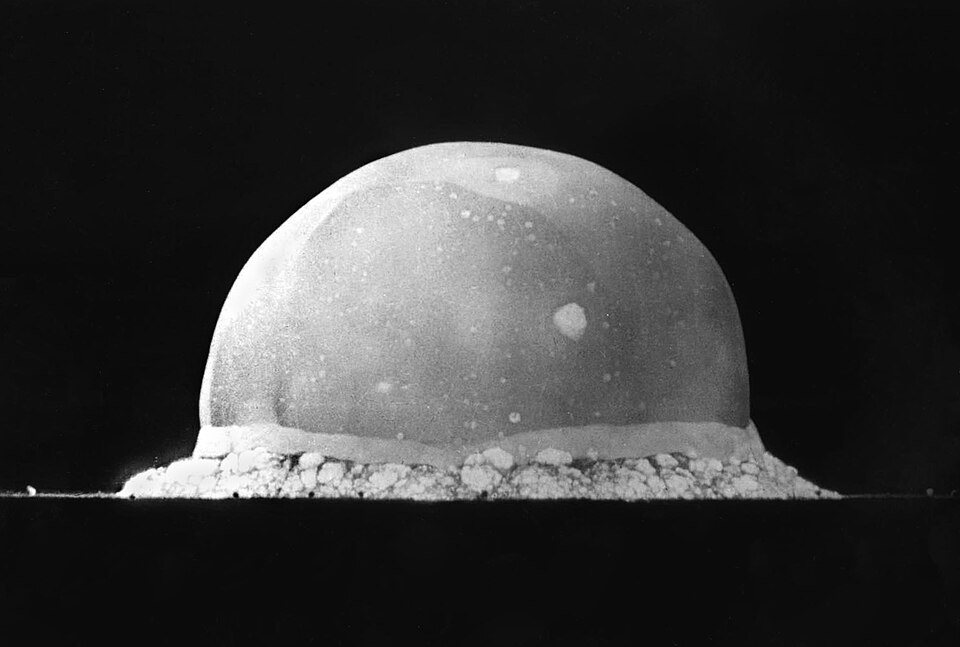
The Y2K bug is the cleanest example: engineers warned, money was spent, and the date passed quietly. The 2030 climate target is often misquoted as a prediction that the world will end that year; the 2018 report set out emissions pathways, not a deadline for the planet. The Doomsday Clock is a metaphor set each year by a board of scientists, not a countdown. Fears that the Large Hadron Collider would create a world-swallowing black hole were answered with physics and a published safety review before it started in 2008.
The test can be applied to any claim. Does it name a date or a condition? Does it say what evidence would prove it wrong? Is the reasoning public, or does it depend on one person’s revelation? And when it misses, does it change its method, or only its date? Nibiru, Camping and Mhlakela changed only their dates.