What Conservatism Is
A tradition that values inherited institutions and customs, distrusts sweeping change, and holds that society changes best slowly and with respect for what came before. Britannica calls it a political doctrine that emphasizes the value of traditional institutions and practices, a preference for “the historically inherited rather than the abstract and ideal.” Conservatives favor institutions that have evolved gradually and see government as the servant, not the master, of existing ways of life.
The word dates from the 19th century. Britannica says it was introduced after 1815 by supporters of the restored French monarchy, including Chateaubriand, and was applied to Britain’s Tories in 1830 (the reaction to the French Revolution). It separates conservatism from the reactionary outlook, which favors restoring a previous order, and from liberalism, which Britannica calls a modernizing movement. Britannica calls it as much a temperament as a doctrine.
Who Owns It: Private Property, Defended in Different Ways
Conservatism has no single economic program. Russell Kirk’s list of principles includes the belief that “freedom and property are closely linked.” Burke’s conservatism defended a landed aristocracy, and the American Federalists, Britannica says, were closer to classical liberalism. After 1945, European conservatives stressed a market economy and a wide array of state social services.
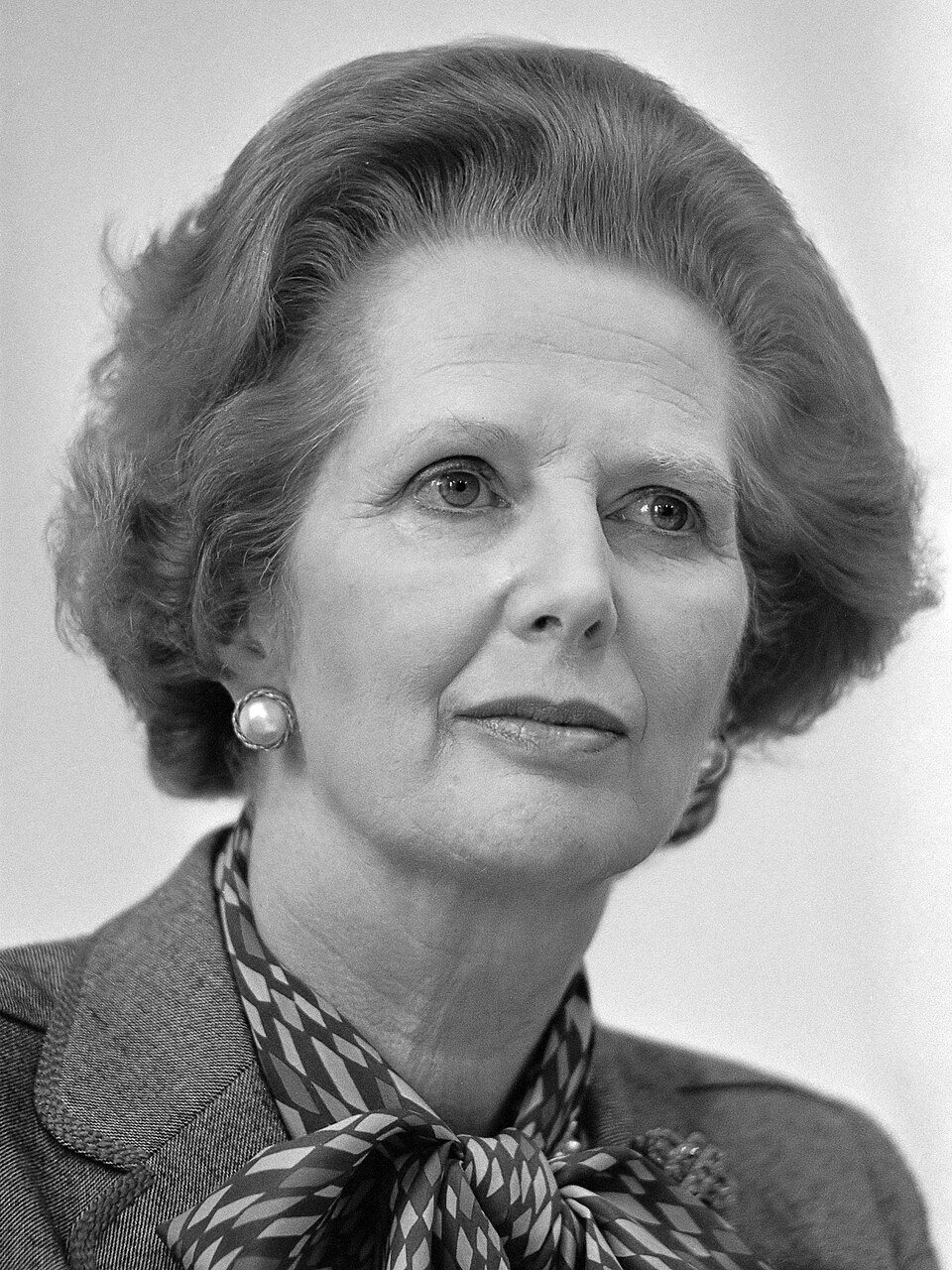
In the United States the divide runs through the New Deal. Republicans generally clung to a 19th-century liberalism that kept government out of the market, then accepted most of the New Deal by 1953. In the 1970s neoconservatives argued high taxes and regulation hampered growth, and in Britain Margaret Thatcher pushed laissez-faire economics.
Who Rules: Established Institutions, Constitutions and Elites
Conservatives favor established institutions: a monarchy and church in Europe, a constitution and courts in the United States. They differ over how much authority belongs to rulers. Burke was a constitutionalist and a parliamentarian, who held that political power is “a trust” for those mindful of what they inherited. Joseph de Maistre wanted a restored absolute monarchy and the authority of “throne and altar,” and critics debate whether he was conservative or reactionary.
Kirk’s ninth principle asks for “prudent restraints upon power and upon human passions.” In practice conservative parties had to win elections. Britannica says they solved the problem by identifying themselves with nationalist sentiment, most vigorously in Bismarck’s Germany (Bismarck).
What Conservatives Believe
Britannica’s account of the diagnosis: conservatives reject the optimistic view that human beings can be morally improved through political change. Some Christians express this as original sin, and skeptics simply observe that history is full of evil. Conservatives therefore look to families, churches and schools to curb base instincts. The remedy for social problems is to trust accumulated experience, and to be wary of planning society in advance from abstract principles.
Russell Kirk set out ten conservative principles in 1993, from an enduring moral order to the reconciling of permanence and change. Burke’s central image is a social contract that is “a partnership not only between those who are living, but between those who are living, those who are dead, and those who are to be born” (his Reflections).
What Conservatives Value
In rank order: order and continuity; tradition and custom; prudence, in Kirk’s language; and community. Kirk’s eighth principle upholds voluntary community, “quite as they oppose involuntary collectivism.” Britannica adds that conservatives have often been associated with established religion, and that the Roman Catholic Church has appealed to more of them than any other.
What it will trade away is speed. Burke’s formula was “A disposition to preserve and an ability to improve, taken together, would be my standard of a statesman.” Conservatives accept change if it is evolutionary, and they treat abstract rights and schemes with caution: Burke argued that “prejudice” accumulates a “latent wisdom” that private reason cannot replace.
A Short History of Conservatism
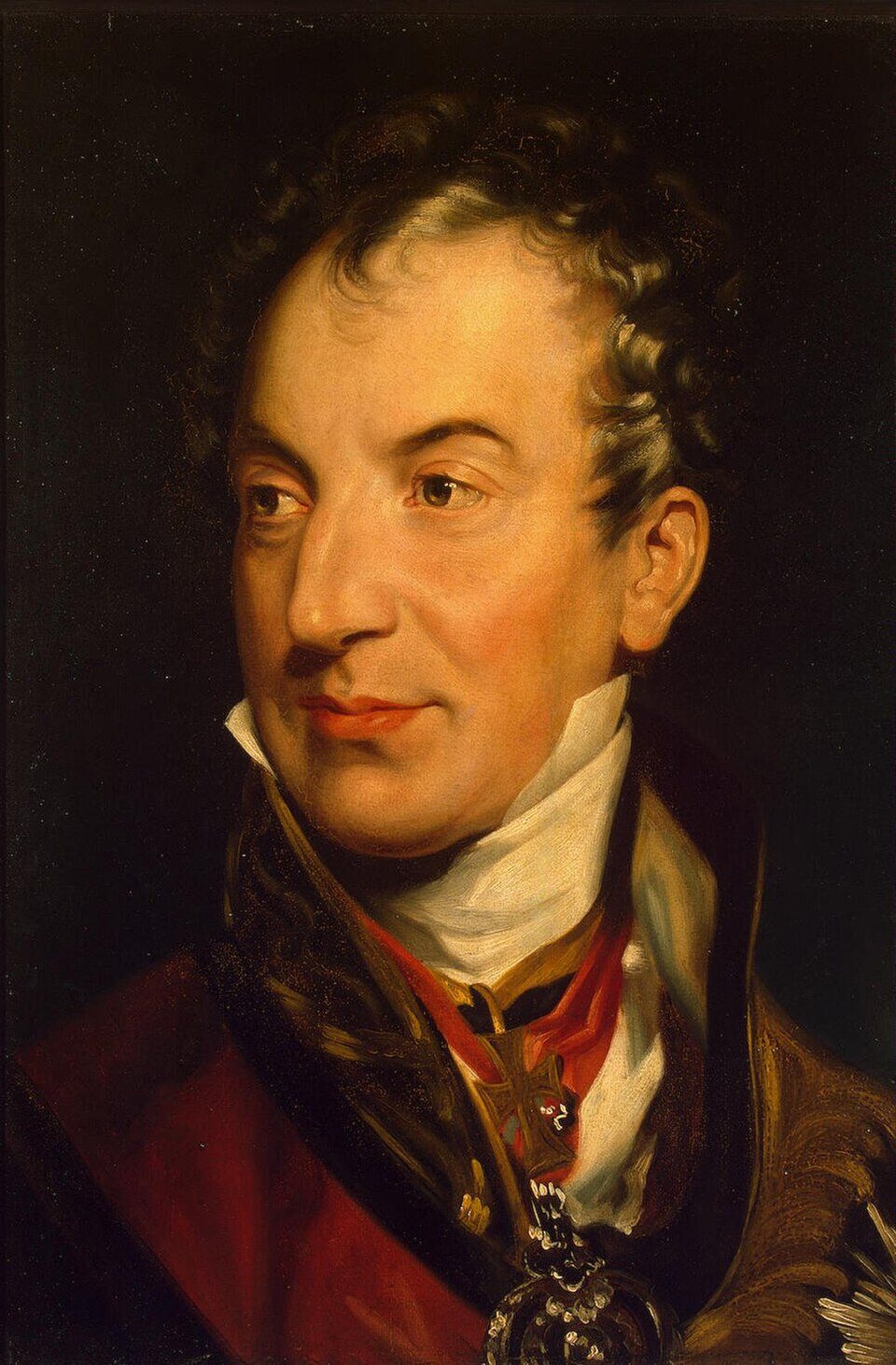
Conservatism began as a reaction to the French Revolution. Burke’s Reflections (1790) predicted it would descend into terror and dictatorship. After Napoleon, Metternich and the Congress of Vienna tried to restore the old order, and by the revolutions of 1848 conservative factions had lost ground. Between 1830 and 1880, Britannica says, liberalism won repeated victories over the conservative establishment in western Europe.
Parties adapted. Peel’s Tamworth Manifesto (1834) and Disraeli’s Tory democracy broadened the British party. Bismarck’s government added social insurance. In the United States, the Old Right opposed the New Deal; National Review began in 1955; Barry Goldwater told the 1964 Republican convention that moderation was no virtue; and Ronald Reagan was inaugurated in 1981 declaring government “the problem.” The latest chapter is the 2024 Republican platform, which made Make America Great Again an official party tagline.
American politics never quite matched Europe’s patterns. Britannica says there was never a monarchy, aristocracy or established church for conservatives to defend or liberals to attack. The Federalists were conservative about order but closer to classical liberalism, and the nearest thing to an aristocracy was the Southern planter class, whose defenders, such as John C. Calhoun, are counted conservative thinkers. For a long time the country looked like one tradition, liberalism, and the New Deal changed that.
The Branches of Conservatism
Britannica distinguishes several. Burkean conservatism is evolutionary and constitutional. Latin conservatism, from Maistre, is counterrevolutionary and has been called reactionary. Tory democracy, Disraeli’s, combined the class system and established institutions with relief for workers. Christian Democracy joined the church’s interests with social justice policies. Thatcherism is individualist and laissez-faire.
In the United States, Britannica names neoconservatives, who accepted a modest welfare state and an interventionist foreign policy, and paleoconservatives, descended from the Old Right, who opposed them. Gaullism, Japan’s long-ruling Liberal-Democratic Party and the agrarian parties of Scandinavia show how national conservatisms differ. The fight between the neoconservatives and their critics is covered in its own node.
Where It Has Been Tried
Britain’s Conservative Party has governed for long stretches since the 19th century, and Britannica says the Conservatives reversed very few of Labour’s postwar innovations when they returned in 1951 (the postwar consensus). Bismarck’s Germany combined nationalism, a dominant Junker class and welfare laws. Japan’s conservative rule was nearly uninterrupted from the 1880s except for the 1930s and 1940s.
In the United States, Republicans regained the presidency in 1953 after accepting most of the New Deal, and again under Reagan from 1981. Britannica also records the decline of old-style conservatism after 1830 and the collapse of the last monarchies in World War I.
In Germany the Christian Democrats governed continuously from 1982 to 1998 and presided over unification. From the 1990s German conservatives tended toward minimal government and privatization, but Britannica says that proved difficult in practice, since many Germans kept supporting an extensive safety net.
The Case for It and the Case Against It
“Conservatives oppose all change.”
Burke wrote that “a disposition to preserve and an ability to improve” is the standard of a statesman. Peel’s Tamworth Manifesto of 1834 pledged to reform to survive. Kirk’s tenth principle says permanence and change must be reconciled. Britannica notes the British Conservatives left most of Labour’s postwar reforms in place in 1951.
Defenders argue that societies are too complex for rationalist blueprints, that inherited institutions encode accumulated knowledge, and that rapid change risks disaster. Britannica quotes Viscount Falkland: “If it is not necessary to change, it is necessary not to change.” Burke predicted the Revolution’s descent into terror, which supporters count as vindication.
Critics say conservatism has defended injustice. Ambrose Bierce defined a conservative as “a statesman who is enamored of existing evils.” Friedrich Hayek argued in 1960 that the conservative “does not object to coercion or arbitrary power so long as it is used for what he regards as the right purposes” (Hayek’s postscript). Maistre’s critics call his program reactionary, not conservative.
Conservatives reply that societies are so complex that there is no reliable connection between what governments try to do and what happens, which makes interference with wages, prices or rents futile and dangerous.
What Conservatism Is Not
“Conservative just means Republican.”
Britannica describes conservatism across Britain, Germany, France, Italy, Japan and the United States, with very different parties. In America, Republicans accepted most of the New Deal by 1953, challenged it in the 1970s and 1980s, and put tariffs in their 2024 platform. The label follows the era’s argument, not one party.
It is not reaction: Britannica separates conservatism from the reactionary outlook that seeks to restore a previous order. It is not liberalism, which Britannica calls a modernizing movement, or libertarianism: Britannica says Thatcher’s “there is no such thing as society” had more in common with modern libertarianism than with Burke.
It is not a synonym for the Republican Party or for any party. Britain’s Conservatives, Germany’s Christian Democrats, Japan’s Liberal-Democrats and the Federalists were all conservative in different senses. Britannica even notes that hard-line Soviet communists were called “conservatives” in the late 1980s, because the word describes a temperament.
Conservatism Today
Britannica says division, not unity, marked conservatism around the world in the first decades of the 21st century, even after communism’s defeat. In the United States, Gallup’s 2025 survey found 35 percent of Americans called themselves conservative, 33 percent moderate and 28 percent liberal, and 77 percent of Republicans called themselves conservative (the numbers).
The Republican Party’s 2024 platform made Make America Great Again an official tagline, listed 20 “promises” on immigration, the economy, energy, taxes and crime, supported tariffs, a departure from past positions on trade, and dropped the Affordable Care Act repeal language of 2016 and 2020, according to NBC News.