What Communism Is
Communism names two things: a future classless society where land and factories belong to everyone and no state is needed, and the one-party states that ruled in its name. The two meanings share a word and little else, so a fair claim about communism says which one it means. The first is a goal sketched by Karl Marx and Friedrich Engels in the 1840s. The second is a historical record: for much of the 20th century about one-third of the world’s population lived under communist regimes, in Encyclopaedia Britannica’s count, and five countries are still ruled by communist parties in 2026.
The word came into use in the 1840s, from the Latin communis, “shared” or “common.” Engels defined it in 1847 as “the doctrine of the conditions of the liberation of the proletariat,” the class of people who own nothing but their ability to work. Marx and Engels often used “communism” and “socialism” interchangeably. In 1875 Marx sketched two phases after capitalism: a first phase that still pays people according to their work, and a higher phase run on the rule “from each according to his ability, to each according to his needs.”
Vladimir Lenin fixed the vocabulary the states would use. In State and Revolution (1917) he called Marx’s first phase “socialism” and kept “communism” for the higher one, and in 1918 his Bolsheviks took the name All-Russian Communist Party. That is why the Soviet constitution of 1936 called the country “a socialist state of workers and peasants” while the party that ran it was called communist. In their own terms, the communist states were building toward communism. None of them claimed to have arrived.
Who Owns It: Everything Held in Common, Then Run by the State
Britannica defines communism as public ownership and communal control of at least the major means of production. Marx and Engels put the program in one line in the Communist Manifesto: “Abolition of private property.” The Manifesto lists ten measures for advanced countries, from a progressive income tax and the end of inheritance to state factories and free education. The end goal is ownership by everyone, with no class living off the work of another.
The Russian Revolution turned that into a working economy. In War Communism, from 1918 to 1921, the Bolsheviks nationalized industry and requisitioned grain. In 1921 the New Economic Policy let peasants keep land and trade, while the state held heavy industry, banking and foreign trade. From 1929 the state collectivized the farms. Britannica calls the result a command economy: officials, not prices, decided what was made. The communist states still in power have since loosened it, in different degrees.
Who Rules: A Party That Speaks for the Working Class
In theory the rule is temporary. Marx wrote in 1875 that between capitalism and communism the state “can be nothing but the revolutionary dictatorship of the proletariat,” meaning the working class ruling over its former owners. Lenin added a party: class consciousness, he argued in 1901, had to be brought to workers from outside, by a party. Where communist parties won power, they wrote their leadership into law, and Britannica notes that the single party tolerated no opposition.
The promised end is the withering away of the state. Engels wrote that the state is not abolished; it “dies out,” as governing people gives way to administering things. No communist state has reached that stage. China’s constitution calls Communist Party leadership “the defining feature of socialism with Chinese characteristics,” and Cuba’s calls the party the superior driving force of society and the state.
What Communists Believe
The diagnosis comes in the Manifesto’s first chapter: “The history of all hitherto existing society is the history of class struggles.” Under capitalism, owners and wage workers are the two classes, and the owners’ profit comes from surplus value, the work workers do beyond what their wages pay for. Marx’s 1859 Preface states the method: “The mode of production of material life conditions the general process of social, political and intellectual life.” Law, politics and ideas follow the economy.
The remedy is for workers to take over the means of production. The Manifesto says the aims can be reached only by “forcible overthrow of all existing social conditions,” and that capitalism produces “its own grave-diggers.” On human nature, Marx’s 1845 Theses on Feuerbach hold that the human essence is “the ensemble of the social relations”: people are shaped by the society they live in, so changing society changes them. Marx also called religion “the opium of the people.”
What Communists Value
In rank order: equality of condition first, meaning an end to classes and to living off others’ labor; solidarity second, across borders as well as within them (the Manifesto closes with “Working Men of All Countries, Unite!”); the freedom of everyone third, in Marx’s formula “the free development of each is the condition for the free development of all.” Collective ownership is the means, not the value itself.
What it will trade away is the market and private property, always, and in the Leninist branches also multiparty politics, a free press and independent unions during the transition. Leninists justify the trade as the price of defeating the old owners during the dictatorship of the proletariat. Critics reject it: Rosa Luxemburg in 1918, on the ground that socialism needs free public life, and Pope Pius XI in 1937, who called communism “intrinsically wrong.”
A Short History of Communism
Britannica traces the idea of shared property back to Plato, the first Christians, More’s Utopia, the Diggers and Babeuf. The modern movement begins with Marx and Engels in the 1840s. In 1871 workers held Paris for ten weeks as the Commune, and Marx called it the political form at last discovered for the emancipation of labor.
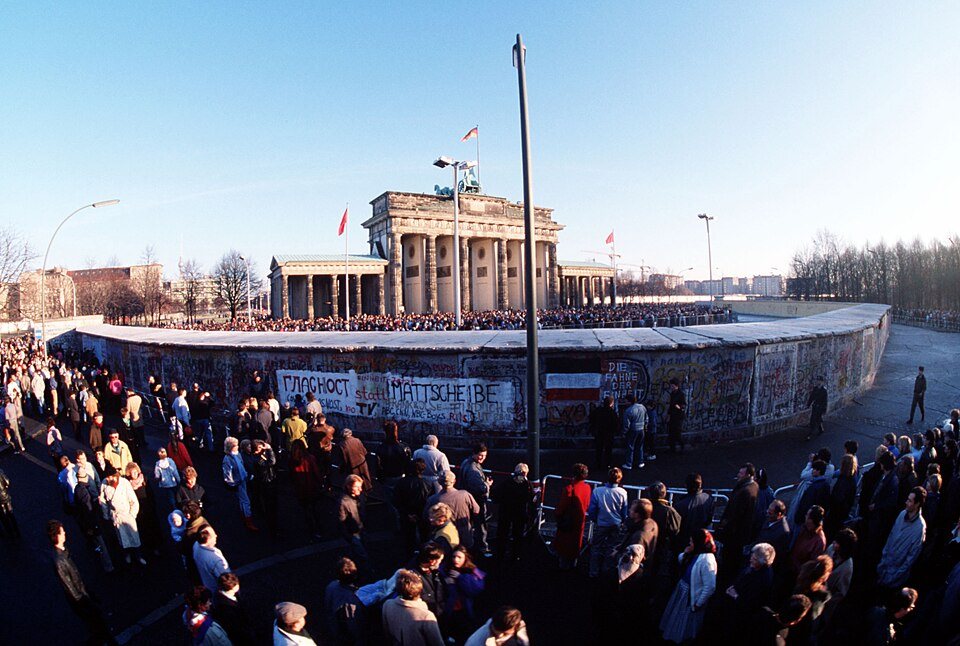
The decisive event was 1917. The Bolsheviks took power in Russia, renamed themselves the All-Russian Communist Party in 1918, and founded the Communist International in 1919 to organize parties abroad. Stalin led the Soviet Union from 1929 to 1953. After the Second World War communist parties took power in China (October 1, 1949) and across the Soviet sphere, and Britannica counts about one-third of the world’s people under communist rule at the movement’s peak. Revolts in Hungary, Czechoslovakia and Poland were put down or contained, then in 1989 the Eastern European governments fell and the Soviet Union ended on December 25, 1991.
The Branches of Communism
The movement split almost as soon as it won, over who had kept faith with Marx. Trotskyism argued the Soviet state had been captured by a bureaucracy. Maoism put the peasantry and a people’s army at the center. Juche made self-reliance the creed of North Korea. Eurocommunism was the Western European parties’ break with Moscow.
Smaller currents are less known. Council communists and left communists rejected party rule in favor of workers’ councils. Titoism and Hoxhaism were two different ways of leaving the Soviet orbit, one toward self-management and the other toward isolation. Posadism was a Trotskyist offshoot that wrote about nuclear war and flying saucers. Marxism-Leninism, the Soviet doctrine, is the base most of these branches build on or argue with.
Where It Has Been Tried
The Soviet Union (1917 to 1991) was the first communist state. Its record includes forced collectivization and the famines of 1930 to 1934, and mass arrests and executions in the Great Terror of 1937 and 1938. China under Mao (from 1949) ran the Great Leap Forward, which ended in a famine that killed an estimated 18 to 45 million people. In Cambodia the Khmer Rouge (1975 to 1979) killed about a quarter of the population by Britannica’s estimate.
In Eastern Europe, revolts in Hungary, Czechoslovakia and Poland met Soviet force or martial law until the governments fell in 1989. The states that survived changed course: China from 1978 and Vietnam from 1986 kept the party and opened the economy. Estimates of the dead vary widely by event, and each case is dated and sourced in its own node.
The Case for It and the Case Against It
“Communism killed 100 million people.”
That total comes from the 1997 Black Book of Communism’s introduction by Stephane Courtois. Two of its own authors, Nicolas Werth and Jean-Louis Margolin, publicly disputed the total. Historians estimate individual events separately: 18 to 45 million for the Great Leap Forward famine, depending on the scholar, and 1.5 to 3 million for Cambodia.
Its defenders make three arguments. Capitalism produces inequality and cyclical crises that only common ownership can end. Communist states industrialized poor countries fast and raised life expectancy and living standards. And the worst failures belong to particular leaders and circumstances, not to the idea. Britannica notes that, according to its advocates, communism is a higher and more advanced form of socialism.
Critics make three arguments. Planning cannot replace prices, so command economies waste resources and lose their incentives. Concentrated power with no opposition leads to terror and famine, as Luxemburg warned in 1918. And the human cost is the decisive fact, though the headline total is contested among historians.
What Communism Is Not
“That was never real communism.”
Marx’s 1875 text allowed a long first phase, and no communist state claimed to have reached the higher one. The Soviet constitution called the country a socialist state. Whether they were building communism or betraying it is the dispute between Trotskyists, council communists and their critics. The texts support arguments on both sides.
It is not the same as socialism, though Marx used the words interchangeably and Lenin later split them, with socialism as the first phase. Socialism has its own page. It is not social democracy, which keeps the market and private property and seeks to regulate them. It is not anarchism, which also wants a stateless end but rejects the transitional state that Marx’s path runs through.
The mislabel argued hardest is whether the one-party states were communist at all. Their rulers said they were building toward it. Trotskyists, council communists and some anarchists said the states had betrayed it, calling them state capitalism or a bureaucratic caste. Opponents say the record shows what the doctrine produces. Both sides cite the same texts.
Communism Today
Five countries are ruled by communist parties in 2026: China, Vietnam, Laos, Cuba and North Korea. Each constitution names the party as the leading force, and all but North Korea allow substantial private economies. China’s party has more than ninety million members, according to the Council on Foreign Relations. Freedom House rates China Not Free at 9 out of 100 and Cuba at 10.
Outside power, the picture is mixed. Elections in 2026 saw communist parties lose ground in Kerala, India, in May and win few seats in Nepal in March.