What Capitalism Is
An economic system in which private owners hold most businesses, and markets, not a central plan, mostly decide what is made, at what price, and who earns what. Britannica calls it an economic system, dominant in the Western world since the breakup of feudalism, in which most means of production are privately owned and production is guided and income distributed largely through markets. It is also called the free market, free enterprise or private enterprise economy, and it rests on private property, the profit motive and market competition.
Early landmark uses come from critics: Karl Marx’s Capital (1867) and Der moderne Kapitalismus (1902) by Werner Sombart, a scholar who moved from Marxism to conservatism. “Free enterprise” is one of the names Britannica lists for the same system.
Who Owns It: Private Owners, Competing in Markets
In theory, individuals and firms own land, factories, shops and ideas, and compete for customers. Income follows from what owners and workers can sell. Ownership takes several forms: sole proprietors, corporations, and worker cooperatives such as Mondragon in Spain, which has 81 self-governing cooperatives.
Competition is itself something the law protects. The Sherman Act of 1890, the first federal act against monopolistic practices, declared contracts, combinations or conspiracies in restraint of trade illegal and made it a crime to monopolize. The act shows that even a system built on private property has written limits on how much one owner may control.
Law also builds markets. Britannica says the mercantilist states of 1500 to 1750 provided uniform monetary systems and legal codes that were necessary for economic development and eventually made possible the shift from public to private initiative. The state is both a limit on markets and a builder of them.
Who Rules: Capitalism Has Run Alongside Many Kinds of Rule
Capitalism does not specify a government. It has coexisted with parliamentary democracy, with a one-party state and with a dictatorship. In China, the 2018 constitution names non-public economies major components of the socialist market economy, while Freedom House rates China Not Free, 9 out of 100 (China). Nazi Germany kept private ownership in industry, and economic historians found private property was not merely nominal (Nazi Germany).
Britannica says the policies of 19th-century political liberalism included free trade, sound money, balanced budgets and minimal poor relief. Whether private markets and political freedom depend on each other is argued over, not settled by the record.
What Capitalists Believe
The core belief is that markets turn self-interest into public benefit. Adam Smith wrote in 1776 that a merchant “intends only his own gain” and is “led by an invisible hand to promote an end which was no part of his intention.” Joseph Schumpeter added a second claim in 1942: that capitalism’s engine is not equilibrium but creative destruction, “incessantly destroying the old one, incessantly creating a new one.”
The third belief is about knowledge. Friedrich Hayek argued that the information needed to run an economy is dispersed among millions of people and that market prices carry it. Ludwig von Mises argued in 1920 that socialism could not calculate the value of resources (the calculation debate). On human nature, Smith’s merchant acts from self-interest, and the system is built around that fact. Britannica says Smith’s book recommended leaving economic decisions to the free play of self-regulating market forces.
What Capitalists Value
In rank order: economic liberty and property rights; competition; reward for effort and risk; and growth through innovation. Britannica ties the system’s early ethic to the Protestant Reformation, which diminished disdain for acquisitive effort and gave “hard work and frugality” a stronger religious sanction (the Protestant ethic).
What it will trade away is security and equality of outcome. Schumpeter’s new products and methods threaten existing firms, and income follows markets, so incomes differ. Critics read the values differently. Marx wrote that the bourgeoisie left “no other nexus between man and man than naked self-interest” (Marx).
A Short History of Capitalism
Britannica says antecedents existed in the ancient world and pockets flourished in the later Middle Ages, but continuous development dates from the 16th century. It was spearheaded by the English cloth industry. Mercantilist states of 1500 to 1750 supplied uniform money and legal codes, and historians link mercantilism and colonial trade to slavery and empire. In the 18th century the focus shifted from commerce to industry, and the factory system created a new class of industrial workers. Marx wrote in 1848 that “constant revolutionising of production” distinguished the bourgeois epoch from all earlier ones.
Smith’s Wealth of Nations (1776) gave the system its classical argument, and after the Napoleonic Wars its policies spread. World War I was a turning point: markets shrank, the gold standard was abandoned and trade barriers multiplied. The Great Depression ended laissez-faire in most countries, and the decades after 1945 produced welfare states that performed well. Since the 1970s, Britannica says, inequality has risen both within countries and among them, and the crisis of 2007 to 2009 revived interest in socialism.
The Branches of Capitalism
The system comes in many forms. Merchant capitalism and mercantilism came first, then laissez-faire industrial capitalism in the 19th century. After 1945 the mixed or welfare form spread across the West. The Nordic countries are often cited as a variant, though their governments describe a market economy, and the Danish prime minister said so in 2015.
Other forms have the state steer the market. Fascist regimes directed private business to national goals. China and Vietnam keep party rule and a large private sector, and Cuba and Laos allow private activity under party leadership (party-states with markets). Worker cooperatives are a further variant, one that socialists claim for their own tradition.
Where It Has Been Tried
England from the 16th century is the earliest case Britannica names. The record is a mix of growth and breakdown. Global extreme poverty fell from about 2.3 billion people in 1990 to 811 million in 2026 by the World Bank’s count, mostly through growth in East and South Asia. In the United States, household incomes sit at $83,730 median in 2024, and the Gini index of inequality did not change significantly from 2023.
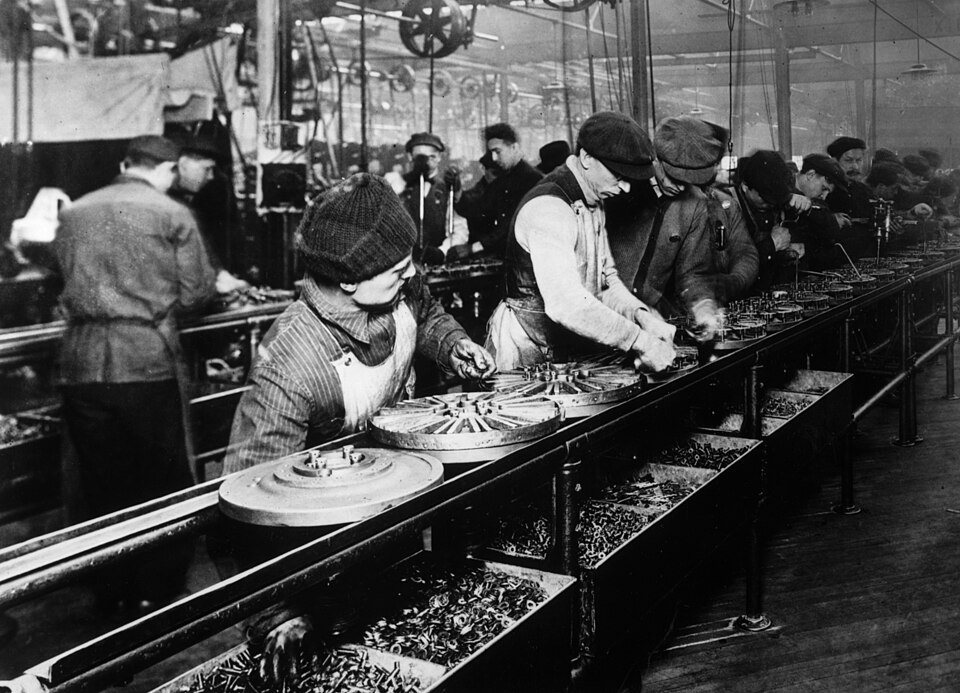
The failures are equally documented. The Great Depression lasted from 1929 into World War II, and the Federal Reserve’s own history says it could have prevented the deflation by preventing the banking collapse. The Roosevelt administration answered with the Glass-Steagall Act and federal deposit insurance. Capitalism’s record is both its main defense and its main indictment. Vietnam’s GDP per capita rose from under $500 in 1986 to $5,066 in 2025, and its private sector is now over 40 percent of GDP, but Vietnam is a one-party state.
The Case for It and the Case Against It
“Capitalism has lifted billions out of poverty.”
The World Bank says extreme poverty fell from about 2.3 billion people in 1990 to 811 million in 2026, driven by growth in East and South Asia. It also says progress has slowed over the last decade. Whether the cause was markets, state direction or both is the argument: China’s growth came under a communist party.
Defenders say markets coordinate millions of decisions that no planner could, reward innovation, and have lifted living standards. They cite the fall in extreme poverty, the postwar boom, and Schumpeter’s argument that competition creates new products and methods. Smith wrote that he had “never known much good done by those who affected to trade for the public good.”
Critics list three failings: instability, social harms such as pollution and mistreatment of workers, and inequality. Marx wrote that capital comes into the world “dripping from head to foot, from every pore, with blood and dirt.” Some historians link profit-driven systems to slavery and colonialism. Defenders point to law as the corrective, as with the Sherman Act and the Glass-Steagall reforms.
Both sides can cite different periods. The postwar capitalist economies, with their welfare states, performed well, Britannica says, restoring confidence lost in the 1930s, and confidence fell again after the crisis of 2007 to 2009. The defense and the indictment each have their decades.
What Capitalism Is Not
“Capitalism and democracy always go together.”
Nazi Germany kept private industry, economic historians found. China’s constitution recognizes non-public economies as major components of its market economy, and Freedom House rates China Not Free, 9 out of 100. Denmark and the United States pair markets with elections. The two vary independently.
It is not the same as socialism, which puts the main means of production under social control. It is not the same as a welfare state. Denmark’s prime minister said “Denmark is a market economy,” and Heritage Foundation analysts wrote that the Nordic countries “are not technically socialist.” It is also not the same as laissez-faire: the Sherman Act, the Glass-Steagall Act and the welfare states all show capitalism with heavy state involvement.
And capitalism is not democracy. The two have often travelled together, but they are separate things, and the world’s largest party-state runs a large private economy.
Capitalism Today
In the United States, Gallup found 54 percent positive on capitalism in 2025, down from 60 percent in 2021, and 55 percent in 2026. Pew found 57 percent in 2022, down from 65 percent in 2019. Support splits by party and age: Republicans 74 percent positive on capitalism and Democrats 42 percent in 2025. Americans also separate kinds of business: in 2025 Gallup found small business 95 percent positive and big business 37 percent.
Britannica notes that the policies favored by capitalism’s recent critics differ little from the New Deal’s. The live questions are monopoly, inequality, the pace of poverty reduction and how much states should direct markets.
Age is also a sharp divide. In Gallup’s August 2026 survey, adults 18 to 34 rated socialism more positively than capitalism, 57 to 43 percent, while those 55 and older favored capitalism, 65 to 34. The survey measured reactions to the words, not to any program.